Toolkit Type: Guidance
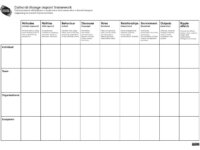
This resource includes a framework, basic guidance and canvas for use in mapping and assessing organisational readiness and capacity development, designing and developing assessment criteria for capacity-building, facilitating strategic dialogue, supporting and assessing the impact of innovation teams and labs, and enabling structured focus on what elements should be prioritised in capacity-building efforts as well as for case production and knowledge sharing.
This guidance contains 13 implementation plans laying out practical ways to address corruption. It is divided into 6 issue areas, each with an overview of the problem as well as solutions. The plans emerged from “Smarter Crowdsourcing Anti-Corruption” (2017). The Smarter Crowdsourcing method is an agile process, which begins with problem definition followed by online sourcing of global expertise to surface innovative ideas and then turns them into practical implementation plans. This…
This resource describes open government good practices and presents them to encourage further adoption and innovation. The publisher's goal is to help government reformers and civil society partners in improving the quality and output of co-creation processes across the Open Government Partnership (OGP). The resource was created to aid OGP partners but is applicable to others interested in open government.
The Toolkit contains content organised in a Question & Answer format, a matrix of…
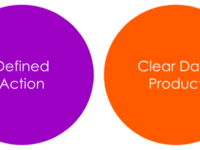
This resource provides guidance on four criteria/factors (Specific Problem, Defined action, Clear Data Product, Accessible data) the publisher has found to be helpful for public sector organisations considering running a data analytics project. It also contains information on privacy impact assessments and research ethics.
This report identifies five common pitfalls that organisations fall into when using theory of change, and walks through five rules of thumb that will help organisations to use the approach to tackle complex problems. The report includes case studies demonstrating these pitfalls and rules of thumb in practice.
Toolkit
Demand for Health Services: A Human-Centred Field Guide for Investigating and Responding to…
This field guide introduces human-centred design as an approach to addressing challenges related to community demand for services (specifically immunization services, but it could be applied to others). This Field Guide exists to help investigate, understand and respond to challenges of demand. It draws on insights from behavioural science and employs human-centred methods to improve immunization outcomes. Includes a 170 page field manual, process map, and workbook with tools. Its process…
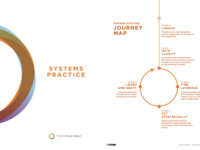
This resource walks you through a systems practice, and describes process phases (Launch, Gain Clarity, Find Leverage, Act Strategically, and Learn and Adapt) and methods for guiding the practice.
This resource has been developed in collaboration with teams across The Omidyar Group. This workbook aims to fill the gap between the promise of a systems approach for making social change and putting it into practice. It was created alongside curriculum as part of a paid course.
For each method,…
These guides, created by the Government Laboratory, systematize the best experiences and learning generated by servers and public institutions in recent years.
These tools of support and permanent consultation, are designed so that the different organisms of the State can develop innovation processes with a view from the user, that allows to generate services and solutions more connected with their needs. There are two options: Contests and Projects.
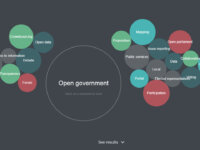
The OGP Toolbox is a collaborative platform that gathers digital tools developed and used throughout the world by organizations to improve democracy and promote transparency, participation and collaboration.
It is designed as a social network and includes use cases and tool "collections," technical criteria informed by the community and recommendations based on the experience of users that have already implemented existing solutions.
The goals of the publisher and platform are to:
- allow actors…
The Experiment Co-Creation Platform (ECP) is a model for collaboration and experimenting dedicated in delivering sustainable solutions to wicked urban problems.
The ECP model was developed and prototyped by Demos Helsinki. In the model, cities, higher education institutions and non-academic collaborators such as companies and foundations together define a desirable shared vision to work towards to as well as identify the challenges preventing the vision from happening. Research-based teams…