User Type: Manager
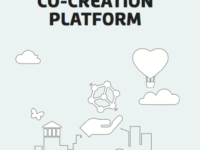
The Experiment Co-Creation Platform (ECP) is a model for collaboration and experimenting dedicated in delivering sustainable solutions to wicked urban problems.
The ECP model was developed and prototyped by Demos Helsinki. In the model, cities, higher education institutions and non-academic collaborators such as companies and foundations together define a desirable shared vision to work towards to as well as identify the challenges preventing the vision from happening. Research-based teams…
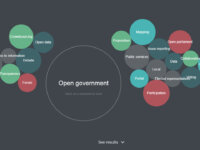
The OGP Toolbox is a collaborative platform that gathers digital tools developed and used throughout the world by organizations to improve democracy and promote transparency, participation and collaboration.
It is designed as a social network and includes use cases and tool "collections," technical criteria informed by the community and recommendations based on the experience of users that have already implemented existing solutions.
The goals of the publisher and platform are to:
- allow actors…
Public Design Vault is a curated directory of 500+ design tools & resources for public good. These resources are intended for those working at the intersection of human-centered design, innovation and public/social impact. The resource also contains "collections," or bundles of tools each categorized according to a use case (e.g. brainstorming) or a specific topic (e.g. leadership).
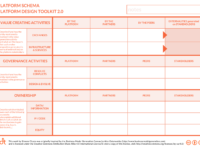
Platform Design Toolkit is based on the tradition of service design thinking and the publishers intend it to overcome the limitations in traditional, linear, business modeling approaches. This methodology is based on a multi-sided, ecosystem based, platform model instead of a traditional product or service design. Those interested in building their "government as a platform" strategy or building a suite of digital or non-digital products or services would likely find value in this approach but…
This toolkit outlines Bridgeable’s approach to harnessing behavioural economics (BE) to design better products and services that nudge user behaviour. It combines a service design approach with a BE approach, with the caveat that BE helps identify and tweak pivotal moments of decision making but not overall user experience or strategies.
The toolkit includes an overview of BE as well as an ideation and testing framework incorporating BE principles to move from a current state to an idea future…
This toolkit was developed to help us cope with the rapidly changing world, such as global networks and autonomous drone fleets—that have never existed before. The publishers suggest that we need new stories and new mythologies to tell us how these things fit into our lives and make sense of these transformations.
The toolkit contains a card deck exploring different colored "archetypes" or ways of making meaning and each includes different ways of understanding Interactions, Environments,…
This manual introduces strategic foresight as a practice in the context of the 2030 Agenda for Sustainable Development. It was created with consideration for the resource constraints in developing country contexts, so proposes light-touch and low-cost methods. However, it could easily be applied elsewhere.
The manual features a selection of methods and techniques suited for framing development or policy discussions, but there are many methods and techniques available that are considered part of…
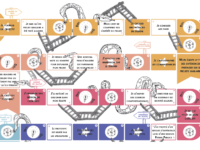
Designed with the assistance of the CNFPT and the DGAFP, this game is inspired by "Chutes & Ladders": a board game where the team must realize the major stages of their project, and sometimes encounters ladders (these "little miracles" that win several boxes at once) and chutes (these pitfalls that push back the project carrier). The resource is in French.
Here you find a selection of the Danish Design Centre’s commonly used tools. It includes information about the methods, instructions for tool use, and printable materials.
The tools are divided in three categories that are used at different stages in the design process - and often in this order: Explore, Co-create, and Give the future concrete form.
Explore helps the participants to open up and get around all aspects of the issue. Co-create contains tools that help participants get in-depth…
The toolkit is designed to be both informative and actionable - helping integrate the latest research in human behavior and decision making into practice. The toolkit features five tools to help designers apply findings from the field of behavioral economics to their practice in order to provide a head start on framing research as well as developing new strategies for solving user problems.
The toolkit includes:
Reference Cards: behavioral economics research findings organized and…