User Type: Manager
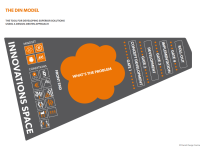
The DIN model is a methodology for developing solutions using a design-driven approach with the goals of achieving better and more innovative processes and outcomes, increasing probability of implementation, and improving user satisfaction. The model helps explore all the potential pitfalls, possibilities and limitations, particularly in the "front end" or early stage of projects. The DIN model consists of a series of phases and four ‘gates’. Each phase contains a variety of activities and…
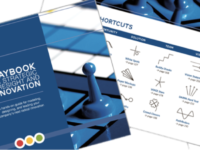
This resource contains a method library and playbook for commonly used strategic foresight tools, organised by a guiding framework of five planning phases (perspective, opportunity, solution, team, and vision). While it does contain the tools themselves, the resource also contains extensive guidance on each method, including overall guidance, examples, instructions, insights, tips, and tool templates. It also contains overall guiding principles, underlying theories, and considerations for using…
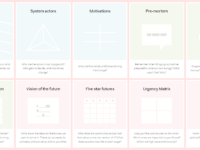
This resource is a modular set of tools (10 methods in 3 phases) that can be run in various ways, from a general tool to discover and ideate futures into a premeditated, repeated and ever-focusing exercise to build a vision on one or more lines of work. The resource can also be used to bring transparency and alignment to any organization through repeated exercises. It consists of three types of tools: Worldbuilding, Predictive Analysis and the Optimal Futures. The authors also suggest a process…
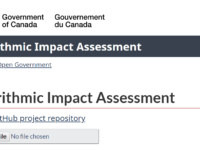
The AIA is a questionnaire designed to help assess and mitigate the impacts associated with deploying an automated decision system. It helps identify the impact level of an automated decision system. It was developed with the Canadian Directive on Automated Decision-Making in mind but it can be applied elsewhere. The questions are focused on business processes, data, and system design decisions.
The questionnaire asks around 60 questions and the results will demonstrate impact level as well as a…
The Public Innovation Index (PII) is the primary tool used by the city to globally measure the innovative capacities of public institutions in Bogotá. It is a biennial tool that sets a milestone through the publication of its results.
The Public Management Innovation Laboratory – LABCapital of the District Oversight Office has designed the PII to measure the level of innovation in public entities, assuming the responsibility of designing, implementing, and analyzing the collected information,…
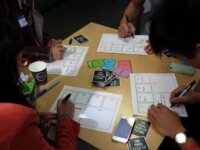
This resource is an imagination game that challenges players to collaboratively and competitively describe objects from a range of alternative futures. The object of the game is to come up with the most entertaining and thought-provoking descriptions of hypothetical objects from different near-, medium-, and long-term futures. The card deck can be downloaded and printed and contains cards, instructions, playsheets, and blank cards that you can customize with your own content. The website also…
Innovate to Save was launched in February 2017 with funding from Welsh Government. The programme blends grant funding to undertake a Research and Development phase, incorporating prototyping and piloting of the organisations' ideas, followed by the opportunity to apply for an interest-free loan on negotiable terms to implement the project at scale during an implementation phase.
Repayable finance is a tool that governments can use to support innovation in public services - allowing governments…
This is a tool compendium created specifically for participants of a programme in Victoria, Australia. It is a PDF containing an organised selection of the key tools used during the sessions.
It is divided into two sections:
1. ‘tools for experimental problem solving’ and aligns with both the publisher's Experimental Continuum and Six Principles for exploring the unobvious.
2. ‘tools for setting the conditions’, which looks beyond the project challenge to other factors that can impede…
This online interactive playbook is intended for teams to work better together in order to get things done. It is organised into Health Monitor (checks and activities for building team health), individual plays (filterable standalone activities), and game plans (series of plays for common use cases). The playbook organises the materials by project, service, and leadership team type, provides detailed instructions on how to run the plays and offers downloads of materials. Since many plays are…
This is a free, self-paced, 3-5 hour course designed to build your capacity for bringing a design approach to complex problems. The course is intended to: develop a design mindset, define a problem, and dig deep and clarify problems. The publisher also includes downloadable toolkits as part of the course.