
The MaRS Library contains articles, templates, reports, workbooks, reference guides and videos covering a range of topics, including accounting, funding, governance, intellectual property, leadership, legal issues, marketing, product management, selling, social innovation, strategy and talent.
It is intended for an entrepreneurial context, but it can be adapted for a public sector organisational context.
User Type: Policy maker or adviser

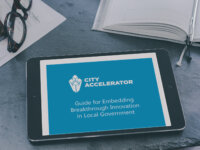
The guide offers practical guidance to local government officials on how to build a culture and practice of innovation and give local leaders an action-oriented framework for breakthrough
innovation. It lays out nine “Imperatives” towards this end, with concrete action steps for each to help cities get started, along with illustrative case studies.
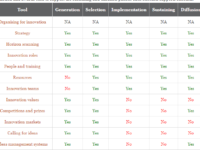
Toolkit developed by the Australian central government, this resource offers 28 pieces of guidance, methods, or techniques for different stages of an organisational innovation lifecycle.
The resource includes an Innovation Diagnostic to get a snapshot on which phase of the innovation cycle an agency might need to focus on.
This toolkit is for officials and staff at governments and institutions that are interested in launching a participatory budgeting process. Its purpose is to build understanding of what it takes to start a participatory budgeting process and how to lay a foundation for success.
It answers the questions:
How does a typical PB process work?
What are the impacts of PB?
What budgets can be used for PB?
What staffing and other resources are needed to implement PB?
How do I get started?
Evidence and Resource Library on Public Sector Reform which documents country experiences, good practices and challenges, shares a wide range of information on modalities /methodologies on peer learning, publicises original, empirical research when and where knowledge gaps are identified, and documents and disseminates stories of change. Hundreds of entries are tagged by problem type, theme, and keyword.


Information and resources to guide United States federal employees working on challenges and prizes. It includes guidance on each challenge phase, from preparation to execution and also provides guidance on different types of challenges. It includes case studies and a list of resources for more detailed guidance and support.
The publisher defines Open Policy Making as developing and delivering policy in a fast-paced and increasingly networked and digital world through collaborative approaches, new analytical techniques, and testing and iteratively improving policy.
The manual includes information about Open Policy Making in the United Kingdom government as well as tools, step-by-step guidance and techniques policy makers can use to create more open and user led policy.
The Government Innovators Network is a collection of ideas and examples of government innovation for policymakers, policy advisors, and practitioners. It contains news, articles, reports, descriptions of award-winning innovative programs, and events as well as online communities of practice. The publisher's goal is to stimulate new ideas and bring people and ideas together around innovations in government for the purpose of stimulating discourse on the principles and practices of innovation and…

The mission of TEN is to ensure a scientifically and ethically responsible dissemination of applied behavioural insights throughout Europe and beyond. This is done through a range of Open Access (OA) online resources and member activities.
TEN hosts the Nudge Database, a community-sourced collection and validation system for cases of behavioural insights, including everything from interesting hypotheses to laws that have been applied on the basis of large randomised experiments.
The database is…

A collection of design patterns, or ‘gambits’, for influencing user behaviour through design. It’s applicable across product, service, interaction and architectural design, aimed particularly at socially and environmentally beneficial behaviour change. The patterns are drawn from a range of disciplines, and are phrased as questions or provocations to enable the toolkit’s use as both a brainstorming tool and a guide for exploring the field of design for behaviour change.
It includes…