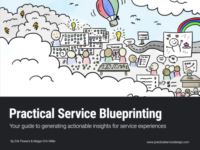
Guide to service blueprinting. The reader analyses their own interaction with service users. Through the tools of personas, scenarios, and the decomposition of a scenario into a blueprint of its elements, the reader can understand and improve their services from a Human-Centred design person

User Type: Practitioner
The publishers describe the PD concept as: based on the observation that in every community or organization, there are a few individuals or groups whose uncommon but successful behaviors and strategies have enabled them to find better solutions to problems than their neighbors who face the same challenges and barriers and have access to same resources.
This resource orients newcomers to the Positive Deviance (PD) approach and provide the essential tools to get started. It includes a brief…
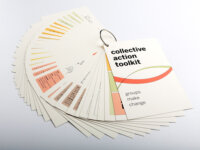
The Collective Action Toolkit (2nd edition) is a set of activities and methods that enables groups of people anywhere to organize, collaborate, and create solutions for problems affecting their community.
It guides users through methods according to six action areas, with suggested pathways from one method to the next. For each method, step-by-step instructions are given, in addition to the time, roles, and materials needed. Some methods include canvasses to guide activity.
The toolkit is…
This resource offers on ways to do things differently by introducing basic guidance on the process of design thinking. It provides guidance on how to introduce this new approach into day-to-day work in the public sector. It was developed for both policymakers and people who design and deliver public services who need to make large changes in how they serve their citizens.
It includes guidance on creating an environment set up to do design work as well as an overview of some of the most commonly…
This resource tells the stories of 20 teams, units and funds established by governments and charged with making innovation happen. i-teams, short for innovation teams, are dedicated teams, units and funds, to structure and embed innovation methods and practice in government. They are largely affiliated with Bloomberg Philanthropies and its associated i-teams program and usually within local governments.
This resource analyses the diversity of structures and approaches, their impacts, and the key…
This guide outlines BETA’s approach to developing behavioural interventions for randomised controlled trials (RCTs), based round 9 guiding questions through four project phases:
Discovery, Diagnosis, Design, Delivery. The guide is designed to primarily help with the discovery and diagnosis phases.
It also includes basic guidance on setting up an RCT.
The website includes an academic directory of those working in the behavioral economics research community.