
The Anticipatory Innovation Starter Kit (AISK) offers a step-by-step approach to access a set of methodologies and tools to solve organisational challenges in the area of anticipatory innovation governance. Developed by the Experimentation Lab for Public Administration (LabX), part of the Administrative Modernisation Agency (AMA) in Portugal, the starter kit intends to be an actionable tool to envisage and anticipate changes in public sector organisations.
Users start in a "Pool of Problems"…
User Type: Practitioner
Mission-oriented innovation aims to create change at the system level where everyone involved is involved and drives development. The working method is a tool for achieving jointly set sustainability goals on a broad basis and with great impact.
In this handbook, we tell about Vinnova's work together with a number of relevant actors to jointly create mission-oriented innovation. You can follow how the actors under 2019-2021 test and develop the working method in the two different areas of food…

This handbook introduces actionable knowledge on developing a Transformative Theory of Change by applying a portfolio approach to address a systems innovation perspective for projects and programmes. Tools, methods and lessons learned are based on working hand in hand with EIT Climate-KIC projects around a portfolio of knowledge services for sustainable systems transformation.
The step-by-step methodology supports practitioners to design, implement and evaluate projects aimed at achieving…
In 2020 and 2021, OPSI developed the idea of an Innovation Incubator jointly with the European Commission through the Horizon 2020 project. The goal of the incubator has been to to maximize the spread of learning and knowledge from initiatives to a larger ecosystem of actors. The OPSI-convened incubator has worked to connect experts and practitioners to provide insights and validation of transformative work, reduce duplication, and streamline replication efforts. The primary principle of the…

This toolkit offers a starting point and a framework for uncovering circular potentials and barriers and to potentially identify new circular business models. The tools in this toolkit focus specifically on mapping a company's circular potentials in the value chain it operates within. And it gives priority to understanding, framing and re-fining the value businesses create in the value chain, exploring the interaction with both customers, collaborators and influential stakeholders. The toolkit…
Living Futures: Scenario Kit is a design tool for understanding, discussing, and shaping the future. It consists of four alternative versions of year 2050 explored through narrated stories from future citizens, themed analyses, and other media files, as well as a set of design tools that puts the scenarios to work. The kit can be used to future proof business models, develop new strategy, and understand and discuss important trends and developments in the present.
The kit is flexible and can be…
This resource was designed to empower everyone to take a human-centred design approach. It was designed specifically for the Queensland Government in Australia but is valuable for anyone interested building an understanding of human centred design and how they can use it. The resource includes sections What is BCD, Why do HCD, and How to do HCD, each with detailed guidance and instructions. The website also includes detailed operational support guidance for procuring human-centred design work,…
This toolbox is a guide for shaping the future and developing organisational operations. It guides users through how to build an organisation’s future capability to ready it to deal with new phenomena. It guides users through all the steps of building a vision and for viewing, interpreting or shaping futures. It contains three phases: Trends and Signals, Interpretation and choices, and Shaping futures. Each tool includes step-by-step guidance and downloadable resources.
Toolkit
 CHAMPION:
Can be remixed
New Metaphors: A Creative Toolkit for Generating Ideas and Reframing Problems
CHAMPION:Can be remixed
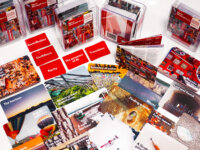
This resource is a generative tool for creating new metaphors to help understand the world in new ways, reframe problems, generate new ideas, and imagine different futures.
New Metaphors has been developed by the Imaginaries Lab, a design research studio based at Carnegie Mellon University, and working internationally. New Metaphors is a set of 150 cards and a number of simple, fun workshop formats which enable idea generation and new ways of thinking about issues creatively, from specific…

A living compilation of social innovation lab theory, templates, and tools to help address complex system problems and design a social innovation lab. This web-based resource includes sections Seeing, Doing, and Being, each with links to additional guidance, tools, and videos.