
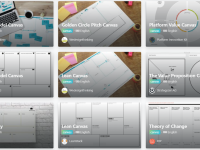
A library with over 150 different canvases and tools, all in relation to the Business Model Canvas and other visual design canvases. The canvases within the library focus on generating insights, strategic business development, value creation, value chains and user insight. The library contains quick tutorials and canvases in many languages and organises canvases by how they are licensed for reuse and remixing. The tools themselves are accessed by the canvas publisher's websites, which are linked…
User Type: Practitioner

The Design Sprint is a methodology for quickly solving problems through developing a hypothesis, prototyping an idea, and testing ideas with users. Design Sprints quickly align teams under a shared vision with clearly defined goals and deliverables. The Design Sprint methodology was developed at Google from a vision to grow user experience (UX) culture and the practice of design leadership across an organisation. The length of time for Design Sprints will be based on the goals and the needs of…
Toolkit
Servitization Mapping – A practical tool to explore strategic directions in a servitization…
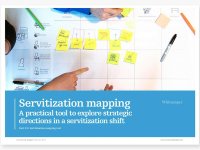
The Servitization Mapping canvas is a practical tool intended for business-to-business manufacturers to explore strategic directions in a servitization shift, that is shifting from a product focus to a service focus. While this resource is oriented toward the private sector, public sector organisations, being primarily service organisations, may find it helpful for refining their service portfolios and being more service user-focused. The canvas is a template to map an existing product and…

This resource is for creating equitable change in schools and learning environments. It helps build the capacity of school communities and learning coordinators to set and pursue equity aspirations, so that every student is future-ready, no matter their background, circumstances, or learning preferences. The resource is based on a design thinking process and includes an overview, methods, and instructions that are specifically tailored to learning environments. The resource includes sections:…
The Design for Policy toolkit PROMPT is targeted toward policymakers who wish to identify where design can add value to the policy cycle process by enhancing user and citizen participation. The majority of the design tools included in the resource are common qualitative research and design methods and follow a gradual shift in emphasis from data-centred policy to people-powered policy, according to the publishers.
PROMPT has been collaboratively developed by PDR - International Design and…
The main goal of the SISCODE Toolbox is to provide support for the co-creation labs in making sense of existing data, tools and toolkits. Co-creation is a non-linear process that involves multiple actors and stakeholders in the ideation, implementation and assessment of product services, policies and systems. The resource aims to improve their efficiency and effectiveness, and the satisfaction of those who take part in the process. The SISCODE Toolbox aims to facilitate the design and…
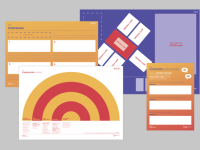
The REMODEL toolkit is targeted at companies producing products and is focused on developing economically sustainable business models through the principle of open source. While the toolkit is private-sector-oriented, some of the co-creation principles and methods can also apply to some areas of the public sector. The toolkit was published based on the experience of REMODEL with 8 Danish companies in 2018. The toolkit consists of 7 work packages and each part has a step-by-step instruction and a…

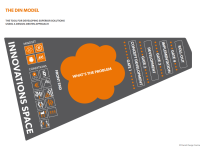
The DIN model is a methodology for developing solutions using a design-driven approach with the goals of achieving better and more innovative processes and outcomes, increasing probability of implementation, and improving user satisfaction. The model helps explore all the potential pitfalls, possibilities and limitations, particularly in the "front end" or early stage of projects. The DIN model consists of a series of phases and four ‘gates’. Each phase contains a variety of activities and…
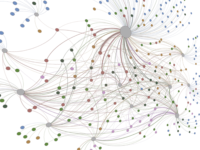
The handbook follows a co-design logic in terms of process, principles and practical tools to support practitioners in the design and implementation of system mapping processes by highlighting the knowledge management component. This resource provides rationale and guidance on the challenge-led system mapping approach, including facilitation guidance for running mapping workshops.
This resource helps mapping practitioners:
• visualise the diversity of innovation projects as a manageable set of…
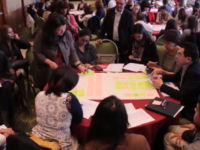
Uno de los ejes fundamentales para el mejoramiento de la Gestión Pública es la evaluación de Políticas, Planes, Proyectos que se desarrollan en el sector público.
En ese sentido, el Laboratorio de Innovación Pública de la Veeduria Distrital de Bogotá (LABcapital) ha diseñado un Portafolio de Instrumentos Innovadores para evaluar Políticas Públicas, como un insumo fundamental para servidores públicos encargados de diseñar e implementar evaluaciones en el sector público.
Este…