
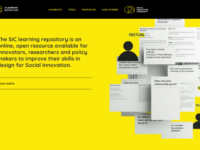
The SIC learning repository is an online, open resource available for innovators, researchers and policy makers to improve their skills in design for Social Innovation.
The tools section is organised by main activities/actions, including:
RECRUITING SOCIAL INNOVATORS
STAKEHOLDER ENGAGEMENT
IDEATION
PRODUCT/SERVICE DEVELOPMENT
PROTOTYPING
SUSTAINABLE GROWTH AND IMPACT
FUNDING OPPORTUNITIES
For each tool, time commitment and team requirements are listed and each can be downloaded as a PDF.
User Type: Stakeholder outside of government

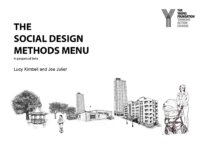
The toolkit provides an approach and methods those looking for a new way to tackle social and policy issues by making services more valuable to customers and users, easier to use, with fewer resources wasted on implementing the right ideas in the wrong way (or on the wrong ideas entirely).
This approach involves spending time understanding people’s experiences and resources on their own terms, taking methodical steps to analyse and address these with their active participation, and pushing for…
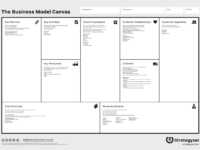
This canvas and associated guidance is is a strategic management and lean startup template that can be used the to describe, design, challenge, and pivot a business model to deliver different values or in different ways. It consists of 9 elements: value proposition, customer segments, customer relationships, channels, key partners, key resources, key activities, cost structure, and revenue streams.
It can be used individually or in a group. It works in conjunction with the Value Proposition…
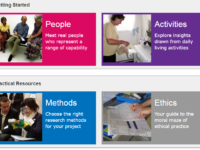
This web-based resource has been created by the Helen Hamlyn Centre for Design at the Royal College of Art to share ways to design inclusively for a range of physical and cognitive abilities. It includes personas representing different abilities, an overview of typical daily activities done by those personas, a selection of design methods, as well as a collection of ethics for designers. The research method selection describes each by input, output, suitability, and characteristics, including…
This website and blog containing a toolkit based on the book GameStorming (not free) and intends to bring a playful or game-like atmosphere to group problem solving activities for the purpose of creating an mindset conducive to innovation and change-making. The site contains games for different purposes, including vision and strategy, planning, problem-solving, and decision-making.
The online resources describe each method and technique in terms of: Object of Play, Number of Players, Duration of…

Grounded Change is an approach and social innovation methodology used by the company InWithForward. It means flipping the order in which most social policies & services are made. Rather than start at the top, in boardrooms, they start at the bottom, with user needs. They have named 7 kinds of interactions that they believe are the most important to weave into policy, procurement, service delivery, and community activities. This resource contains the context, reasons, and mechanisms of Grounded…
The MaRS Library contains articles, templates, reports, workbooks, reference guides and videos covering a range of topics, including accounting, funding, governance, intellectual property, leadership, legal issues, marketing, product management, selling, social innovation, strategy and talent.
It is intended for an entrepreneurial context, but it can be adapted for a public sector organisational context.


This is a curated collection of 30+ resources from Stanford d.school classes and workshops, including activities, tools, and how-to guides. They are intended for anyone who wants to become more familiar with design thinking or unlocking creative thinking in whatever challenge being tackled. Some are full-fledged workshops that for guiding others through. Other resources are short worksheet-based activities.
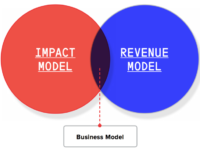
A Role-Playing and Ideation Game That Simulates The Process Of Launching A Social Enterprise. The game walks players through a series of activities in order to simulate the process of ideating and launching a social enterprise in four steps: Learn, Invent, Program, and Report. It is available via a pay-what-you-want digital download, and includes instructions for gameplay, a glossary of 200+ business models, and a suite of other resources.
DIY Learn is a set of online modules to help development practitioners understand and embed practical tools to support social innovation in their work. It contains a series of free, 2-hour courses as well as a trainers handbook. It was created for international development practitioners but is applicable for public sector staff as well.