User Type: Stakeholder outside of government
The toolkit provides an approach and methods those looking for a new way to tackle social and policy issues by making services more valuable to customers and users, easier to use, with fewer resources wasted on implementing the right ideas in the wrong way (or on the wrong ideas entirely).
This approach involves spending time understanding people’s experiences and resources on their own terms, taking methodical steps to analyse and address these with their active participation, and pushing for…
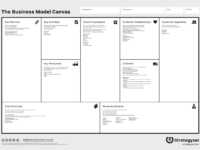
This canvas and associated guidance is is a strategic management and lean startup template that can be used the to describe, design, challenge, and pivot a business model to deliver different values or in different ways. It consists of 9 elements: value proposition, customer segments, customer relationships, channels, key partners, key resources, key activities, cost structure, and revenue streams.
It can be used individually or in a group. It works in conjunction with the Value Proposition…
A collection of design patterns, or ‘gambits’, for influencing user behaviour through design. It’s applicable across product, service, interaction and architectural design, aimed particularly at socially and environmentally beneficial behaviour change. The patterns are drawn from a range of disciplines, and are phrased as questions or provocations to enable the toolkit’s use as both a brainstorming tool and a guide for exploring the field of design for behaviour change.
It includes…
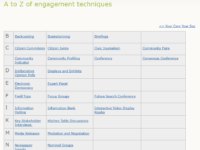
A collection of 55 different public/stakeholder engagement techniques, including an assessment of difficulty, engagement level, cost, when might be used, how many people might be needed to run, timeframes, innovation level and a step by step guide for using each.
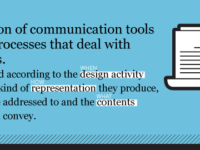
An collection of communication tools used in service design processes that deal with complex systems, organised by design activities, representations, recipients, and contents. The website is the result of the research activity done by Roberta Tassi during her graduation thesis investigating the relation between communication design and service design, starting from the observation of the existing practices in the field of service design.
Each tool contains a description, how-to instructions,…
This is a starter kit covering signal spotting, or detecting early signs of change in several fields: Technology, Policy, Business model, Citizen action, Research finding, Design, Application, Idea / innovation. The online resource includes video guidance, examples of signals in the different fields, and exercises for practice with signal spotting. It also includes exercises for signal spotting in one's own context.
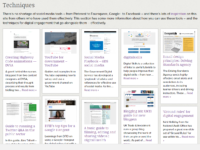
This web-based resource contains ideas and practical help to use digital and social media in the public sector. It is organised by techniwues, strategies, examples, and (user generated) questions. This resource can assist governments with service delivery and stakeholder engagement. The publisher's main website also contains other resources for online communication.
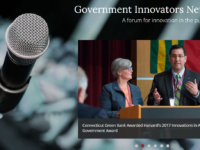
The Government Innovators Network is a collection of ideas and examples of government innovation for policymakers, policy advisors, and practitioners. It contains news, articles, reports, descriptions of award-winning innovative programs, and events as well as online communities of practice. The publisher's goal is to stimulate new ideas and bring people and ideas together around innovations in government for the purpose of stimulating discourse on the principles and practices of innovation and…
This resource distills the United Nations Development Programme's experience and lessons with running Social Innovation Camps into a "how-to" manual for others. The publisher intends it to broaden a project's results, attract donors, find new partners, source new perspectives on an issue, and/or place beneficiaries at the centre of project design. The resource was created within an international development and social innovation context but can be adapted for public sector use.
It is available…
This is a report produced in conjunction with IDEO after a 2-year initiative of the Rockefeller Foundation called Paper Prototyping, an effort to better inform investment decisions of the Foundation. While this resource is not a typical innovation toolkit, it was included because it describes an often implicit and invisible process of developing and testing proposals for innovative solutions to complex problems.