

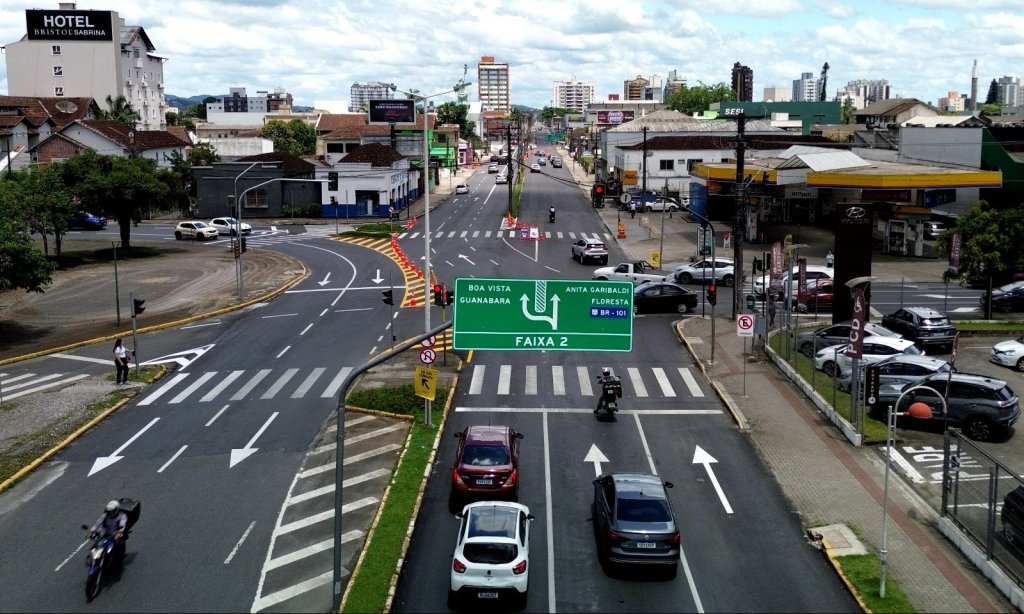
Cities often invest in traffic solutions based on guesswork, wasting public money on interventions that may not work. Joinville built a Smart Mobility methodology that combines real-time traffic data from a partnership with Waze and open-source traffic simulation software (SUMO) to test solutions digitally before any physical work begins. This evidence-based approach has made mobility decisions faster, cheaper, and more effective — saving public funds and improving daily life for residents.
Innovation Summary
Innovation Overview
Urban traffic congestion, road safety, and vehicle emissions are pressing challenges for growing cities. In Joinville, as in most medium and large Brazilian cities, mobility decisions were historically made on a trial-and-error basis: engineers proposed changes, works were executed, and only then could results be assessed. This approach was costly, time-consuming, and often led to community dissatisfaction when interventions needed reworking.
To move from reactive to evidence-based mobility management, Joinville developed a Smart Mobility methodology structured in eight stages — from problem identification through data collection, modelling, simulation, implementation, and results measurement. Two core tools power this methodology. Since 2017, a partnership with Waze provides the city with real-time, georeferenced traffic data updated every two minutes: congestion probability, queue length, average vehicle speed, and delay times. This data feeds into Google Data Studio dashboards that allow technicians to rank streets by congestion levels and prioritize interventions based on evidence.
The second tool is SUMO (Simulation of Urban Mobility), a free, open-source traffic simulator developed by the German Aerospace Agency. SUMO allows engineers to build a digital replica of Joinville's road network — including private vehicles, public transport, and active mobility — and test multiple intervention scenarios virtually before committing to physical works. By evaluating outcomes such as travel time, congestion size, and emissions across different scenarios, the team can select the optimal solution and justify it with data in public consultations.
Together, these tools have transformed how Joinville plans and manages urban mobility. The methodology is continuously applied to new problems across the city, with an expanding team trained in both tools. Joinville was recognized with the InovaCidade Award in 2019 and ranked in the Mobility axis of the Connected Smart Cities 2023 ranking. The approach is designed to scale as the city grows and can be replicated by other municipalities using the same freely available tools.
Innovation Description
What Makes Your Project Innovative?
Most Brazilian municipalities still rely on engineer intuition and isolated datasets to make traffic decisions. Joinville's innovation lies in integrating two complementary tools into a single, structured methodology: Waze data for real-time diagnosis, and SUMO for prospective simulation. This combination closes the loop between problem identification and solution validation.
Joinville was one of Brazil's first municipalities to establish a formal data-sharing partnership with Waze and one of very few to use that data to calibrate traffic simulations. The use of SUMO for multimodal modelling — covering cars, buses, and cyclists simultaneously — is rare in Brazilian municipal governments. Together, these tools replaced trial-and-error with a reproducible, transparent, and low-cost decision-making process that can be audited and presented to the public.
What is the current status of your innovation?
The Smart Mobility methodology has been operational since 2017 and is continuously applied to new mobility challenges across the city. Several interventions have been implemented and evaluated using pre- and post-implementation Waze data comparisons. The team is expanding its use of SUMO for larger network problems and deepening the academic partnership with the University for further model refinement.
Innovation Development
Collaborations & Partnerships
Waze provided real-time traffic data through a formal city-company partnership, enabling evidence-based diagnosis. The Federal University of Santa Catarina (UFSC) contributed academic expertise and student interns in transport engineering, deepening the team's use of SUMO simulations. The community participated through public consultations and hearings where simulation results were presented, increasing transparency and public trust in proposed solutions.
Users, Stakeholders & Beneficiaries
Joinville residents benefit from safer, less congested streets and reduced emissions resulting from better-targeted interventions. Municipal technicians gain access to real-time data and simulation tools that improve decision-making quality and speed. The broader public indirectly contributes as Waze users, voluntarily feeding data that powers the system. Academic partners benefit from applied research opportunities using real urban data.
Innovation Reflections
Results, Outcomes & Impacts
The primary impact is a shift from empirical to evidence-based mobility planning, reducing wasted public expenditure on ineffective interventions. Specific outcomes include: optimized prioritization of road investments based on congestion ranking; selection of traffic intervention scenarios with the best outcomes for travel time, queue length, and emissions before physical implementation; and improved public credibility through transparent, data-backed presentations. Joinville received the InovaCidade Award (2019) and ranked in the Mobility axis of the Connected Smart Cities 2023 ranking.
Challenges and Failures
The main challenges involved building internal technical capacity, as neither Waze data analysis nor SUMO simulation were standard municipal skills. Initial simulations were limited to smaller network segments while the team developed proficiency. Data quality also required careful calibration before use in models. Staff turnover was addressed through extensive process documentation and structured training. Additional challenges include integrating AI to automate complex scenarios — currently being tackled through code development and prototyping — and expanding physical infrastructure to increase overall capacity.
Conditions for Success
Key success conditions included: a formal data-sharing agreement with Waze, providing sustained access to high-quality real-time traffic data at no cost; the availability of SUMO as a free, open-source simulation tool; a structured internal training programme that progressively built team capacity; an academic partnership with UFSC that brought specialised knowledge and supplemented staffing; political support for technology-based approaches; and a culture of incremental learning — starting with small problems to build confidence before tackling larger network challenges.
Replication
A metodologia SmartMobility tem sido replicada internamente, com outros departamentos sendo capacitados para aplicação independente.
A prefeitura tem realizado troca de experiência com governos locais de outras cidades, além de palestra em eventos para difusão do conhecimento.
A metodologia pode facilmente ser adaptada e replicada, pois se tratam de soluções de baixo custo.
Lessons Learned
Starting small was essential: the team gained confidence and competence by modelling simpler traffic problems first, before scaling to larger challenges. The academic partnership with UFSC proved invaluable — not just for technical expertise, but for sustaining institutional knowledge as staff turned over. Other municipalities can replicate this approach using the same freely available tools (Waze for Cities and SUMO) with modest investment in hardware and training. The key is commitment to a structured methodology that connects data collection, simulation, and community engagement in a single workflow.
Anything Else?
Both tools at the core of this methodology are freely available: Waze for Cities is open to municipalities worldwide, and SUMO is open-source software maintained by the German Aerospace Agency. Joinville's experience demonstrates that a mid-sized city in a developing country can build a world-class, data-driven mobility planning capability with low financial investment and high institutional commitment. The full methodology, tools, and case studies are available for sharing with interested cities.
Status:
- Implementation - making the innovation happen
- Evaluation - understanding whether the innovative initiative has delivered what was needed
- Diffusing Lessons - using what was learnt to inform other projects and understanding how the innovation can be applied in other ways
Innovation provided by:

Media:
Files:
Date Published:
30 September 2026