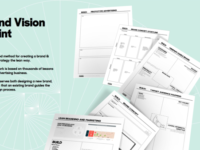
Good For: Build consensus
Lean Brand Creation is a structured method for lean creation of a new brand, and a strategic guideline for an existing brand in any brand, marketing & experience design work. It contains a set of 22 canvasses. It is intended for a marketing context but some techniques could be adapted for public services or for stakeholder engagement.
It is an offspring of Futurice’s Lean Service Creation, and can be used with the LSC toolkit or on its own.
A playbook of 13 key “plays” drawn from successful practices from the private sector and government that the publisher believes, if followed together, will help governments build effective digital services.
Principles and guidance for developing digital services in Argentina and beyond. The resource is available in a Github repository and includes 9 principles, indicators, and standards for API's, website, mobile applications, and others.
This resource is developed by and for open government influencers - civil servants and civil society representatives seeking to collaboratively make governance processes transparent, participatory and accountable. It is intended for those who want to be an open government influencer.
The original guidance includes recommendations and experiences from experienced leaders in Europe and Central Asia. It follows the publishers' joint journeys in navigating challenges to creating an enabling…
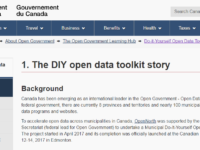
The Do-it-Yourself (DIY) Open Data Toolkit provides a step-by-step guidance on how to develop an open data initiative. The Toolkit is primarily intended for municipalities that have not yet begun an open data project and need some guidance on how to implement one. It can also be referenced by other governments or organizations who are considering initiating an open data initiative.
The toolkit includes: Open data orientation, Planning considerations, Publishing sample data sets, Adopting an open…
The Open Data Toolkit provides guidance intended for South Australia agencies and local councils release open data, although can be adapted to other contexts. It includes guidance on the following steps: Identify, Classify, Approach, Approve, Publish, Maintain.
It includes suggestions on governance decisions and roles as well as privacy, public value, and intellectual property guidance.
This resource aims to enrich the efforts of parliaments and their civil society counterparts to engage in collaborative processes, either as part of the Open Government Partnership National Action Plan or otherwise. The first section focuses on the development of open parliament commitments. The second section shares the experiences of a variety of parliaments and civil society organisations in collaborating in the creation of parliamentary openness commitments and in developing ongoing…
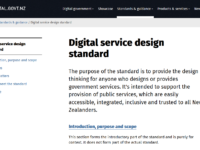
The purpose of the standard is to provide guidance for those in the New Zealand government or anyone who designs or provides government services regarding the provision of accessible, integrated, inclusive public services. It includes principles, rationale, information on how to meet the standard, related implementation guidance and resources, and a glossary.
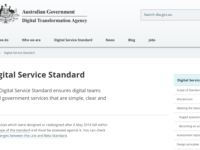
The purpose of the standard is to provide guidance for those in the Australian government or anyone who designs or provides government digital services regarding the provision of simple, clear and fast services. It includes 13 criteria, rationale, information about meeting the standard, design principles, service design and delivery process, related training and guides, and a glossary.
The resource also includes downloadable posters.