
The MaRS Library contains articles, templates, reports, workbooks, reference guides and videos covering a range of topics, including accounting, funding, governance, intellectual property, leadership, legal issues, marketing, product management, selling, social innovation, strategy and talent.
It is intended for an entrepreneurial context, but it can be adapted for a public sector organisational context.
Good For: Build knowledge
The Government Innovators Network is a collection of ideas and examples of government innovation for policymakers, policy advisors, and practitioners. It contains news, articles, reports, descriptions of award-winning innovative programs, and events as well as online communities of practice. The publisher's goal is to stimulate new ideas and bring people and ideas together around innovations in government for the purpose of stimulating discourse on the principles and practices of innovation and…
Evidence and Resource Library on Public Sector Reform which documents country experiences, good practices and challenges, shares a wide range of information on modalities /methodologies on peer learning, publicises original, empirical research when and where knowledge gaps are identified, and documents and disseminates stories of change. Hundreds of entries are tagged by problem type, theme, and keyword.

This is a starter kit covering signal spotting, or detecting early signs of change in several fields: Technology, Policy, Business model, Citizen action, Research finding, Design, Application, Idea / innovation. The online resource includes video guidance, examples of signals in the different fields, and exercises for practice with signal spotting. It also includes exercises for signal spotting in one's own context.
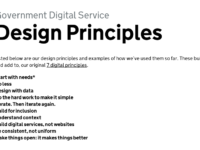
The United Kingdom government's design principles and examples of how they have been used. Each principle includes links to articles with additional explanation and reflections.
1. Start with user needs
2. Do less
3. Design with data
4. Do the hard work to make it simple
5. Iterate. Then iterate again
6. This is for everyone
7. Understand context
8. Build digital services, not websites
9. Be consistent, not uniform
10. Make things open: it makes things better


A curated set of resources on innovation by Tim Kastelle. This resource is primarily framed around private entrepreneurship, but some elements are transferable to a public sector context (i.e. cultivating a growth mindset). The resource is associated with a masterclass offered at the University of Queensland.

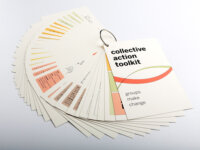
The Collective Action Toolkit (2nd edition) is a set of activities and methods that enables groups of people anywhere to organize, collaborate, and create solutions for problems affecting their community.
It guides users through methods according to six action areas, with suggested pathways from one method to the next. For each method, step-by-step instructions are given, in addition to the time, roles, and materials needed. Some methods include canvasses to guide activity.
The toolkit is…
Toolkit
 HERO:
HERO:
Editable source files available
BETA Guide to developing behavioural interventions for randomised controlled trials
HERO:Editable source files available
This guide outlines BETA’s approach to developing behavioural interventions for randomised controlled trials (RCTs), based round 9 guiding questions through four project phases:
Discovery, Diagnosis, Design, Delivery. The guide is designed to primarily help with the discovery and diagnosis phases.
It also includes basic guidance on setting up an RCT.
The website includes an academic directory of those working in the behavioral economics research community.
A platform for researchers to share findings and methodologies and a repository of theoretical and applied research on open and innovative governance techniques and tools.
It includes:
A platform for researchers to share findings and methodologies;
A repository of theoretical and applied research on open and innovative governance techniques and tools;
A diversity of publication types – from research reports and journal articles to books and dissertations;
A taxonomy for browsing research by…
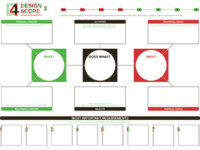
A series of 16 individual templates for different service design methods and techniques, plus posters with a guiding methodology for use in your own workshops. The posters do not include much step-by-step guidance so these are best used by people who have used these methods and techniques previously. The publisher's website also includes some case studies. Available in English and Dutch.