Good For: Build shared understanding
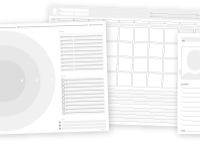
This set of service design resources includes a downloadable zip file of resources created by MrThinkr, such as templates, examples, and guidance on personas, journey mapping, and stakeholder mapping. The website contains video guidance on how to use these methods. In order to download the zip file, you must enter your email. The publisher is also marketing some paid software on their website.
The toolkit provides step-by-step guidance for development practitioners to leverage new sources of data. It is a result of a collaboration of UNDP and UN Global Pulse with support from UN Volunteers, led by UNDP innovation teams in Europe and Central Asia and Arab States.
The guide is structured into three sections - (I) Explore the Problem & System, (II) Assemble the Team and (III) Create the Workplan. Each of the sections comprises of a series of tools for completing the steps needed to…
An collection of communication tools used in service design processes that deal with complex systems, organised by design activities, representations, recipients, and contents. The website is the result of the research activity done by Roberta Tassi during her graduation thesis investigating the relation between communication design and service design, starting from the observation of the existing practices in the field of service design.
Each tool contains a description, how-to instructions,…
The toolkit includes 5 methods for designing a more inclusive lab. The toolkit begins by guiding users through basic user observation, identification, and categorization processes (observation, interviews,
and personas). It then moves into problem definition and stakeholder prioritization, and finally defines a concrete suggestion for increased
diverse stakeholder governance. It includes templates and examples for each method.
This is a report from the Workshop ‘How might we approach transformational change for complex challenges in the future?’, held in London 30-31 August 2017. It provides 18 insights and considerations for playing the enabler, catalyst, and convenor roles in creating a mindset of long-termism.
The toolkit's goal is to help actors conceptualize and operationalize their ambitions in terms of supporting social innovation. It contains not only “procedures” but also knowledge concerning social innovation.
The guide was designed to support European Social Fund (or other) funding organisations that want to focus mainly on service innovation (as opposed to systems innovation or internally oriented process innovation). But it also recognizes the idea of broader societal transitions and the…
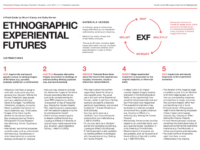
Ethnographic Experiential Futures, is a protocol for surfacing and documenting existing images of the future. It combines Ethnographic futures research, EFR, a protocol for surfacing and documenting existing images of the future. Experiential futures, XF, is a family of approaches for vivid multisensory, transmedia, and diegetic representations of images of the future. The hybrid approach puts together two modes of futures research and practice in a step-by-step guide. Its intent is to help…
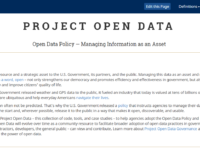
A collection of code, tools, and case studies to help United States federal agencies adopt the Open Data Policy and unlock the potential of government data.
This project is meant to be a living document, so that collaboration in the open data ecosystem is fostered, and the continual update of technology pieces that affect update can happen at a more rapid pace. Edits to the content may be made by anyone.
It could provide other governments with examples and starter content for its own open data…
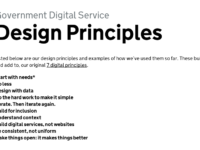
The United Kingdom government's design principles and examples of how they have been used. Each principle includes links to articles with additional explanation and reflections.
1. Start with user needs
2. Do less
3. Design with data
4. Do the hard work to make it simple
5. Iterate. Then iterate again
6. This is for everyone
7. Understand context
8. Build digital services, not websites
9. Be consistent, not uniform
10. Make things open: it makes things better
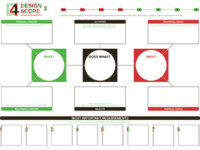
A series of 16 individual templates for different service design methods and techniques, plus posters with a guiding methodology for use in your own workshops. The posters do not include much step-by-step guidance so these are best used by people who have used these methods and techniques previously. The publisher's website also includes some case studies. Available in English and Dutch.