
The resource addresses the use of financial prizes to source solutions to challenges. It draws on academic literature, interviews with analysts and practitioners, surveys of prize sponsors and competitors, databases of small and large awards, and case studies of 12 effective prizes to produce lessons from a range of sectors, goals, and prize types. It provides frameworks and recommendations to help improve current prizes and stimulate effective future use. While it is targeted to philanthropic…
Good For: Compare different possible approaches

A curated set of resources on innovation by Tim Kastelle. This resource is primarily framed around private entrepreneurship, but some elements are transferable to a public sector context (i.e. cultivating a growth mindset). The resource is associated with a masterclass offered at the University of Queensland.
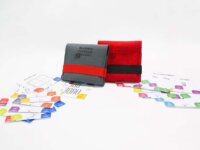
A collection of cards describing methods for planning and executing design research, ideation, experimentation and creation within short iterations (sprints). They split the methods into tasks that follow SCREAM; a methodology which is a modified version of SCRUM, tailored to fit within the publisher's design process.
The card fronts contain basic information, such as activity type, category, and duration. The backs contain basic overviews of the methods and how-to instructions. These are…
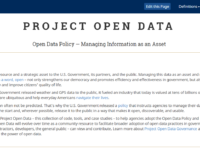
A collection of code, tools, and case studies to help United States federal agencies adopt the Open Data Policy and unlock the potential of government data.
This project is meant to be a living document, so that collaboration in the open data ecosystem is fostered, and the continual update of technology pieces that affect update can happen at a more rapid pace. Edits to the content may be made by anyone.
It could provide other governments with examples and starter content for its own open data…
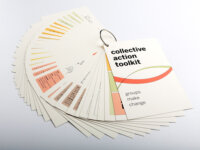
The Collective Action Toolkit (2nd edition) is a set of activities and methods that enables groups of people anywhere to organize, collaborate, and create solutions for problems affecting their community.
It guides users through methods according to six action areas, with suggested pathways from one method to the next. For each method, step-by-step instructions are given, in addition to the time, roles, and materials needed. Some methods include canvasses to guide activity.
The toolkit is…
This resource offers on ways to do things differently by introducing basic guidance on the process of design thinking. It provides guidance on how to introduce this new approach into day-to-day work in the public sector. It was developed for both policymakers and people who design and deliver public services who need to make large changes in how they serve their citizens.
It includes guidance on creating an environment set up to do design work as well as an overview of some of the most commonly…
Toolkit
 CHAMPION:
Can be remixed
i-teams: The teams and funds making innovation happen in governments around the world
CHAMPION:Can be remixed
This resource tells the stories of 20 teams, units and funds established by governments and charged with making innovation happen. i-teams, short for innovation teams, are dedicated teams, units and funds, to structure and embed innovation methods and practice in government. They are largely affiliated with Bloomberg Philanthropies and its associated i-teams program and usually within local governments.
This resource analyses the diversity of structures and approaches, their impacts, and the key…
Toolkit
 HERO:
HERO:
Editable source files available
BETA Guide to developing behavioural interventions for randomised controlled trials
HERO:Editable source files available
This guide outlines BETA’s approach to developing behavioural interventions for randomised controlled trials (RCTs), based round 9 guiding questions through four project phases:
Discovery, Diagnosis, Design, Delivery. The guide is designed to primarily help with the discovery and diagnosis phases.
It also includes basic guidance on setting up an RCT.
The website includes an academic directory of those working in the behavioral economics research community.
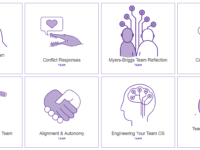
This is a collection of methods and activities, based on Hyper Island’s core methodology, for creative collaboration and realising potential in teams or organisations. It’s a collection of methods and activities, based on Hyper Island’s core methodology and is focused on Learning-by-doing (or Experiential Learning), Reflection (or Reflective Practice), and workshop or group facilitation. It includes Hyper Island tools as well as tools from others.
This web-based resource was designed to build an understanding of how adopting an experimental approach can be used to make policies more effective. It focuses on designing and delivering trials. It includes interactive guidance to determine which type of trial is appropriate.