Good For: Fact finding
This set of service design resources includes a downloadable zip file of resources created by MrThinkr, such as templates, examples, and guidance on personas, journey mapping, and stakeholder mapping. The website contains video guidance on how to use these methods. In order to download the zip file, you must enter your email. The publisher is also marketing some paid software on their website.

The mission of TEN is to ensure a scientifically and ethically responsible dissemination of applied behavioural insights throughout Europe and beyond. This is done through a range of Open Access (OA) online resources and member activities.
TEN hosts the Nudge Database, a community-sourced collection and validation system for cases of behavioural insights, including everything from interesting hypotheses to laws that have been applied on the basis of large randomised experiments.
The database is…
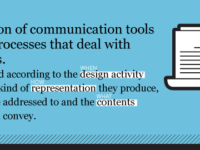
An collection of communication tools used in service design processes that deal with complex systems, organised by design activities, representations, recipients, and contents. The website is the result of the research activity done by Roberta Tassi during her graduation thesis investigating the relation between communication design and service design, starting from the observation of the existing practices in the field of service design.
Each tool contains a description, how-to instructions,…
Evidence and Resource Library on Public Sector Reform which documents country experiences, good practices and challenges, shares a wide range of information on modalities /methodologies on peer learning, publicises original, empirical research when and where knowledge gaps are identified, and documents and disseminates stories of change. Hundreds of entries are tagged by problem type, theme, and keyword.
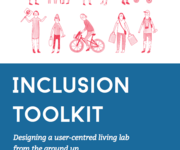
The toolkit includes 5 methods for designing a more inclusive lab. The toolkit begins by guiding users through basic user observation, identification, and categorization processes (observation, interviews,
and personas). It then moves into problem definition and stakeholder prioritization, and finally defines a concrete suggestion for increased
diverse stakeholder governance. It includes templates and examples for each method.
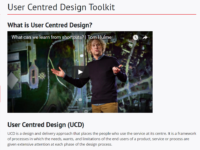
This resource contains a framework and guidance regarding the use of user-centred design. The publisher defines the UCD process in six phases - two planning and four delivery phases. The two planning phases focus on typical project planning aspects such as problem space, resources, agency readiness, team logistics, governance, etc. The four delivery phases are about action, talking to users to understand their real needs, prototyping potential solutions, and building the minimum viable product…
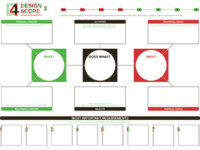
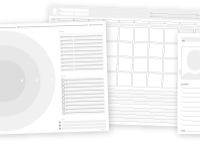
A series of 16 individual templates for different service design methods and techniques, plus posters with a guiding methodology for use in your own workshops. The posters do not include much step-by-step guidance so these are best used by people who have used these methods and techniques previously. The publisher's website also includes some case studies. Available in English and Dutch.
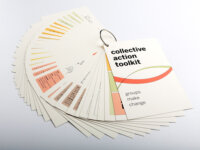
The Collective Action Toolkit (2nd edition) is a set of activities and methods that enables groups of people anywhere to organize, collaborate, and create solutions for problems affecting their community.
It guides users through methods according to six action areas, with suggested pathways from one method to the next. For each method, step-by-step instructions are given, in addition to the time, roles, and materials needed. Some methods include canvasses to guide activity.
The toolkit is…
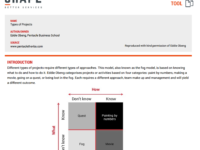
The stated aim of the resource is to enable public sector organisations to use design management thinking and methods currently used by leading companies in the private sector. There is a library tools that are available for free (one must subscribe to access the case studies.) Many of these are commonly-used design methods which have been tweaked and re-branded as Shape Better Services resources. The library content is free to view but using their online guidance requires a paid subscription.
This resource includes a variety of tools and techniques, enabling government entities to develop initiatives and come up with innovative solutions to enhance the efficiency of the government sector, and improve the services provided by the government to individuals and entities.