Level: Minimal
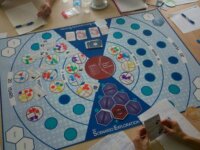
The Scenario Exploration System (SES) is a serious game for future simulation (2035 and 2050). It involves participants exploring their long-term objectives in contrasting scenario-related contexts while interacting with other stakeholders. By creating a realistic journey towards the future, the SES generates a safe space to simulate possible responses connected to any issue of interest to the participants.
There are two editions: "Sustainable Transitions" and "Food Safety and Nutrition…
Grounded Change is an approach and social innovation methodology used by the company InWithForward. It means flipping the order in which most social policies & services are made. Rather than start at the top, in boardrooms, they start at the bottom, with user needs. They have named 7 kinds of interactions that they believe are the most important to weave into policy, procurement, service delivery, and community activities. This resource contains the context, reasons, and mechanisms of Grounded…
The toolkit provides an approach and methods those looking for a new way to tackle social and policy issues by making services more valuable to customers and users, easier to use, with fewer resources wasted on implementing the right ideas in the wrong way (or on the wrong ideas entirely).
This approach involves spending time understanding people’s experiences and resources on their own terms, taking methodical steps to analyse and address these with their active participation, and pushing for…
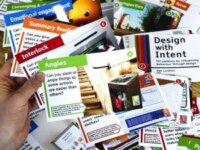
A collection of design patterns, or ‘gambits’, for influencing user behaviour through design. It’s applicable across product, service, interaction and architectural design, aimed particularly at socially and environmentally beneficial behaviour change. The patterns are drawn from a range of disciplines, and are phrased as questions or provocations to enable the toolkit’s use as both a brainstorming tool and a guide for exploring the field of design for behaviour change.
It includes…
Evidence and Resource Library on Public Sector Reform which documents country experiences, good practices and challenges, shares a wide range of information on modalities /methodologies on peer learning, publicises original, empirical research when and where knowledge gaps are identified, and documents and disseminates stories of change. Hundreds of entries are tagged by problem type, theme, and keyword.
The toolkit includes 5 methods for designing a more inclusive lab. The toolkit begins by guiding users through basic user observation, identification, and categorization processes (observation, interviews,
and personas). It then moves into problem definition and stakeholder prioritization, and finally defines a concrete suggestion for increased
diverse stakeholder governance. It includes templates and examples for each method.
This is a report produced in conjunction with IDEO after a 2-year initiative of the Rockefeller Foundation called Paper Prototyping, an effort to better inform investment decisions of the Foundation. While this resource is not a typical innovation toolkit, it was included because it describes an often implicit and invisible process of developing and testing proposals for innovative solutions to complex problems.
This is a report from the Workshop ‘How might we approach transformational change for complex challenges in the future?’, held in London 30-31 August 2017. It provides 18 insights and considerations for playing the enabler, catalyst, and convenor roles in creating a mindset of long-termism.
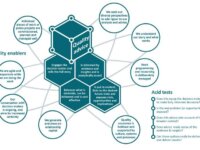
The Policy Quality Framework describes the key characteristics of quality policy advice, as well as the ‘enablers’ of great advice, like considering multiple perspectives, good commissioning, quality assurance processes and work planning.
It is one of three improvement frameworks co-designed for and by the policy community in New Zealand to help government agencies improve their policy quality and capability.
It includes several policy assessments for different stages of the policy cycle and…
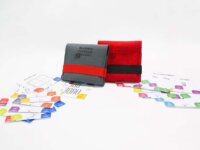
A collection of cards describing methods for planning and executing design research, ideation, experimentation and creation within short iterations (sprints). They split the methods into tasks that follow SCREAM; a methodology which is a modified version of SCRUM, tailored to fit within the publisher's design process.
The card fronts contain basic information, such as activity type, category, and duration. The backs contain basic overviews of the methods and how-to instructions. These are…