
Task Type: Problem solving
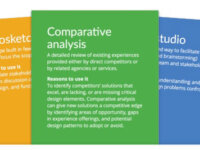
Here you find a selection of the Danish Design Centre’s commonly used tools. It includes information about the methods, instructions for tool use, and printable materials.
The tools are divided in three categories that are used at different stages in the design process - and often in this order: Explore, Co-create, and Give the future concrete form.
Explore helps the participants to open up and get around all aspects of the issue. Co-create contains tools that help participants get in-depth…
Produced as part of the Making Sense project, which draws on nine citizen sensing campaigns in Holland, Kosovo and Spain in 2016 and 2017. Based on that experience, the publisher developed a framework and methods and tools for citizen participation in environmental monitoring and action. Their approach is bottom-up and participatory, which the publishers call "citizen sensing."
The publishers offer a software platform for collecting data, methodologies for making sense of data, and best…
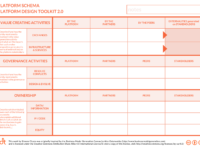
Platform Design Toolkit is based on the tradition of service design thinking and the publishers intend it to overcome the limitations in traditional, linear, business modeling approaches. This methodology is based on a multi-sided, ecosystem based, platform model instead of a traditional product or service design. Those interested in building their "government as a platform" strategy or building a suite of digital or non-digital products or services would likely find value in this approach but…
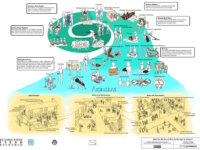
This toolkit is for people help each other map out the skills, knowledge, resources and capabilities they have in order to respond to, and effect, change in their community.
The Possible Futures Lab of the Information Security Group at Royal Holloway University of London originally developed the toolkit to assist grassroots co-creation in the community of Pallion, Sunderland. They have made their toolkits available to others to adapt.
This toolkit provides guidance for public servants on how to communicate with the public using the simplest and clearest language possible and to ensure that all services are accessible, and meets the diverse needs of all our customers. The guidance is based on Universal Design principles.
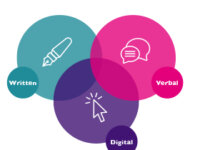
The toolkit contains advice on general writing style principles, verbal and non-verbal communications, design of forms and documents, web and social media content and how to display signage. It features a…
This toolkit outlines Bridgeable’s approach to harnessing behavioural economics (BE) to design better products and services that nudge user behaviour. It combines a service design approach with a BE approach, with the caveat that BE helps identify and tweak pivotal moments of decision making but not overall user experience or strategies.
The toolkit includes an overview of BE as well as an ideation and testing framework incorporating BE principles to move from a current state to an idea future…
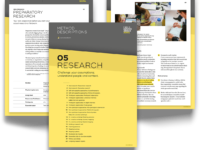
This resource is a method library containing 54 method descriptions for using the key methods in service design. These methods include instructions, guidelines, and-tips-and tricks for activities within research, ideation, prototyping, and facilitation. This collection only contains building blocks. It doesn’t detail how to assemble them into a cohesive design process or how to plan or manage it. The associated (paid) book and curriculum offers this context.
An A/B test measures and compares the effectiveness of different versions of a program feature, service, or communication. This interactive tool helps users prepare for A/B tests, create random assignments of users to A or B, and helps users analyse which was more successful. The publishers suggest that this approach can be used by governments to optimize outreach materials, communications and engagement, program features, and processes (e.g., applications, payments).
A collection of tools that describe how 18F digital service teams put human-centered design into practice. These cards are focused on design in the context of digital services, but can be adapted to non-technical design projects as well.
The resource is online and also available as printable cards.
The card set includes simplified information on various design methods according to an overall methodology: Discover, Decide, Make,Validate. There are also "Fundamentals" cards related to incentives,…
Reference Panels, also known as Citizens' Assemblies, Commissions and Juries, are an example of long-form deliberative processes that are frequently used by governments and public agencies to obtain detailed guidance on important and sometimes controversial policies.
Based on the publisher's experience with reference panels, they offer eight moves from their playbook to help others plan their own deliberative process.