
The Hackers’ Kit supports different types of discussions around project and program design. It's aim is to normalise innovation in a large organization by embedding new practices in key project management business processes. Worked on and tested with over 25 project teams in the United Nations Development Programme, the toolkit is intended for an international development context but could be applied to any large organisation with a desire to innovate.
It includes a wall map of the process,…
Toolkit Features: Techniques
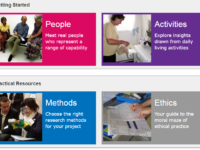
This web-based resource has been created by the Helen Hamlyn Centre for Design at the Royal College of Art to share ways to design inclusively for a range of physical and cognitive abilities. It includes personas representing different abilities, an overview of typical daily activities done by those personas, a selection of design methods, as well as a collection of ethics for designers. The research method selection describes each by input, output, suitability, and characteristics, including…

The toolkit provides an approach and methods those looking for a new way to tackle social and policy issues by making services more valuable to customers and users, easier to use, with fewer resources wasted on implementing the right ideas in the wrong way (or on the wrong ideas entirely).
This approach involves spending time understanding people’s experiences and resources on their own terms, taking methodical steps to analyse and address these with their active participation, and pushing for…

This document gives you the information you need to create your own lab. This could be a UNICEF lab—or could simply be a space of creativity that is aimed at solving significant global problems through the application of dedicated local resources.
It provides background on labs, defining a lab's purpose, budget and scoping, and examples of different lab models (outreach/training, product development, service development, operational research, and content broadcasting).
It also includes…
This website and blog containing a toolkit based on the book GameStorming (not free) and intends to bring a playful or game-like atmosphere to group problem solving activities for the purpose of creating an mindset conducive to innovation and change-making. The site contains games for different purposes, including vision and strategy, planning, problem-solving, and decision-making.
The online resources describe each method and technique in terms of: Object of Play, Number of Players, Duration of…
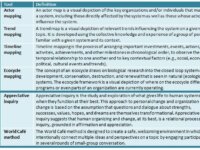
A blog series introducing and sharing guidance for using different tools to support systems thinking and practice, including actor mapping, trend mapping, timeline mapping, ecocycle mapping, appreciative inquiry, and world cafe. Each offers a downloadable guide in exchange for an email address.
An collection of communication tools used in service design processes that deal with complex systems, organised by design activities, representations, recipients, and contents. The website is the result of the research activity done by Roberta Tassi during her graduation thesis investigating the relation between communication design and service design, starting from the observation of the existing practices in the field of service design.
Each tool contains a description, how-to instructions,…
This resource distills the United Nations Development Programme's experience and lessons with running Social Innovation Camps into a "how-to" manual for others. The publisher intends it to broaden a project's results, attract donors, find new partners, source new perspectives on an issue, and/or place beneficiaries at the centre of project design. The resource was created within an international development and social innovation context but can be adapted for public sector use.
It is available…
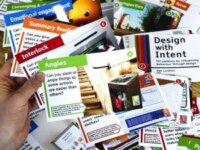
A collection of design patterns, or ‘gambits’, for influencing user behaviour through design. It’s applicable across product, service, interaction and architectural design, aimed particularly at socially and environmentally beneficial behaviour change. The patterns are drawn from a range of disciplines, and are phrased as questions or provocations to enable the toolkit’s use as both a brainstorming tool and a guide for exploring the field of design for behaviour change.
It includes…

The publisher defines Open Policy Making as developing and delivering policy in a fast-paced and increasingly networked and digital world through collaborative approaches, new analytical techniques, and testing and iteratively improving policy.
The manual includes information about Open Policy Making in the United Kingdom government as well as tools, step-by-step guidance and techniques policy makers can use to create more open and user led policy.