Skip to content
An official website of the OECD. Find out more
Created by the Public Governance Directorate

This website was created by the OECD Observatory of Public Sector Innovation (OPSI), part of the OECD Public Governance Directorate (GOV).

How to validate authenticity

Validation that this is an official OECD website can be found on the Innovative Government page of the corporate OECD website.

The toolkit's goal is to help actors conceptualize and operationalize their ambitions in terms of supporting social innovation. It contains not only “procedures” but also knowledge concerning social innovation. The guide was designed to support European Social Fund (or other) funding organisations that want to focus mainly on service innovation (as opposed to systems innovation or internally oriented process innovation). But it also recognizes the idea of broader societal transitions and the…
Toolkit

Government Digital Service Design Principles

Hero HERO:
Editable source files available
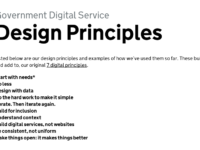
The United Kingdom government's design principles and examples of how they have been used. Each principle includes links to articles with additional explanation and reflections. 1. Start with user needs 2. Do less 3. Design with data 4. Do the hard work to make it simple 5. Iterate. Then iterate again 6. This is for everyone 7. Understand context 8. Build digital services, not websites 9. Be consistent, not uniform 10. Make things open: it makes things better
Toolkit

JAMK Service Design Toolkit

A guided introduction to 14 common service design tools, such as empathy maps, personas, and customer journeys. They are organised by the publisher's methodology: Define, Learn, Solve, Test. Toolkit. The publisher offers a suggested path through the tools but the publisher suggests that each can be used on their own. The toolkit is available via website in exchange for your email address.
Toolkit

User Centred Design Toolkit

Champion CHAMPION:
Can be remixed
This resource contains a framework and guidance regarding the use of user-centred design. The publisher defines the UCD process in six phases - two planning and four delivery phases. The two planning phases focus on typical project planning aspects such as problem space, resources, agency readiness, team logistics, governance, etc. The four delivery phases are about action, talking to users to understand their real needs, prototyping potential solutions, and building the minimum viable product…
Toolkit

Collective Action Toolkit

Champion CHAMPION:
Can be remixed
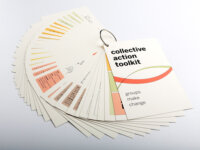
The Collective Action Toolkit (2nd edition) is a set of activities and methods that enables groups of people anywhere to organize, collaborate, and create solutions for problems affecting their community. It guides users through methods according to six action areas, with suggested pathways from one method to the next. For each method, step-by-step instructions are given, in addition to the time, roles, and materials needed. Some methods include canvasses to guide activity. The toolkit is…
Toolkit

Designing for Public Services

Champion CHAMPION:
Can be remixed
This resource offers on ways to do things differently by introducing basic guidance on the process of design thinking. It provides guidance on how to introduce this new approach into day-to-day work in the public sector. It was developed for both policymakers and people who design and deliver public services who need to make large changes in how they serve their citizens. It includes guidance on creating an environment set up to do design work as well as an overview of some of the most commonly…
Toolkit

Foresight Training Manual

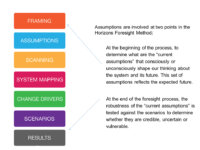
This guide is a facilitation toolkit for staff at Horizons and others interested in practising the Horizons Foresight Method in their own organizations. Its aims are to build foresight literacy in general, to explain the Horizons Foresight Method in particular, and to build capacity for horizon scanning in the Canadian federal government and other organizations. It provides a detailed description of concepts and processes, divided into 6 modules. Modules include facilitation guides, tip sheets,…
Toolkit

Positive Deviance Initiative

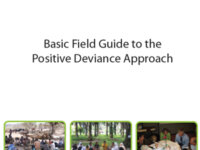
The publishers describe the PD concept as: based on the observation that in every community or organization, there are a few individuals or groups whose uncommon but successful behaviors and strategies have enabled them to find better solutions to problems than their neighbors who face the same challenges and barriers and have access to same resources. This resource orients newcomers to the Positive Deviance (PD) approach and provide the essential tools to get started. It includes a brief…
Toolkit

Service Design Toolkit

Champion CHAMPION:
Can be remixed
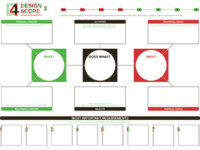
A series of 16 individual templates for different service design methods and techniques, plus posters with a guiding methodology for use in your own workshops. The posters do not include much step-by-step guidance so these are best used by people who have used these methods and techniques previously. The publisher's website also includes some case studies. Available in English and Dutch.
Toolkit

Government Service Design Manual

Hero HERO:
Editable source files available
This resource is intended to support United Kingdom government teams create and run digital services according to their Digital Service Standard. It covers Accessibility and assisted digital, Agile delivery, Design, Measuring success, Service assessments and getting on GOV.UK, Technology, The team, and User research.