
The book is a collection of ready-to-implement tools to structure and manage the challenges and exploit opportunities of sustainability and transitions. The goal is twofold: improving the understanding of a challenge by going deeper, broader and by improving the quality of the discussions and conversations around the problem among participants. It focuses not only on the problem-solving process but also on the learning process while designing and implementing solutions. The tools are presented…
Toolkit Format: PDF publication
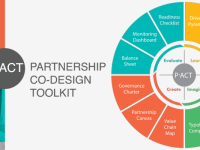
This toolkit is targeted towards impact entrepreneurs, intrapreneurs, partnership brokers and facilitators, and accelerators supporting impact entrepreneurs who are initiating value chain partnerships, partnerships where organizations seek to integrate existing or create new value chains. The Partnership Co-design Toolkit (P.ACT) includes four stages of co-design and 12 tools, each building on the previous, to bring partners closer, to developing a complete partnership model, and get ready to…

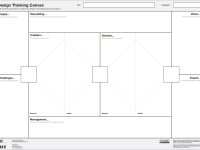
The Design Thinking Canvas is a template and a structured approach to plan a design-led strategy and process. It provides an overview of the different elements in a design process and is a systemic technique to collect inputs from a project. This is helpful for the internal communication within a project team as well as externally towards stakeholders. The tool contains 8 elements: People, Storytelling, Challenges, Vision, Impact, Management, Problem, and Solution. The latter two refers to the…
The Design Thinking Handbook is a comprehensive guide to the practice of design thinking and framework popularized by the Stanford d.school. The resource is organised into sections Why We Need Design Thinking, Empathize, Define, Ideate, Prototype, Test and it can be downloaded as an epub, PDF, or audiobook, or can be read in a web-based format. The text is supplemented with links to podcasts, videos, interactive exercises, and other related resources to build practice along with knowledge of…
This toolkit is a guide on how to carry out prototyping and testing. The purpose of the process is to test and improve the ideas at an early stage, before committing a lot of resources to it. The tool provides a step by step guide with simple descriptions on the techniques in each phase and things to watch out for.
The prototyping process is divided into the phases:
- Doing the Groundwork
- Prototyping phase 1
- Prototyping phase 2
- Learn and Evaluate.
The document contains short…


Our Futures is a game for discovering new ways of engaging the public in thinking about alternative futures. The basic premise of Our Futures is that participants are randomly offered a series of constraints by drawing cards and rolling a dice, which serve as a primer for imagining a participatory futures activity. The game is played either with a group of individuals competing against each other or in teams in 30-75 minutes. The game has three different gameplay models of varying scope and…
Toolkit
Servitization Mapping – A practical tool to explore strategic directions in a servitization…
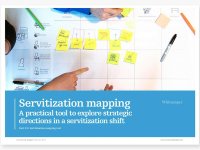
The Servitization Mapping canvas is a practical tool intended for business-to-business manufacturers to explore strategic directions in a servitization shift, that is shifting from a product focus to a service focus. While this resource is oriented toward the private sector, public sector organisations, being primarily service organisations, may find it helpful for refining their service portfolios and being more service user-focused. The canvas is a template to map an existing product and…
This resource is for creating equitable change in schools and learning environments. It helps build the capacity of school communities and learning coordinators to set and pursue equity aspirations, so that every student is future-ready, no matter their background, circumstances, or learning preferences. The resource is based on a design thinking process and includes an overview, methods, and instructions that are specifically tailored to learning environments. The resource includes sections:…
The main goal of the SISCODE Toolbox is to provide support for the co-creation labs in making sense of existing data, tools and toolkits. Co-creation is a non-linear process that involves multiple actors and stakeholders in the ideation, implementation and assessment of product services, policies and systems. The resource aims to improve their efficiency and effectiveness, and the satisfaction of those who take part in the process. The SISCODE Toolbox aims to facilitate the design and…
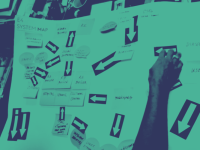
This toolkit allows organisations to change their mindset and move from a project-oriented approach towards a platform-way-of-working that is designed to tackle complex problems. The toolkit was developed and tested by the Danish Design Centre in collaboration with United Nations Development Programme (UNDP) and 40+ country offices. The toolkit consists of several mapping exercises. After using the integrated Mission Statement Generator to create an ambitious yet realistic mission statement,…