
Toolkit Navigator
A compendium of toolkits for public sector innovation and transformation, curated by OPSI and our partners around the world

The IIDM Toolset was designed as a guide for organisations and individuals seeking to build the capacity of problem solvers to innovate and collaborate more effectively. The Toolset addresses two key components: (1) cultivating an innovator’s mindset, and (2) improving the processes that support decision making along the journey from idea to impact. The publisher asserts that both of these ingredients are vital for decision making to yield improved innovation. The Toolset offers users…
Produced as part of the Making Sense project, which draws on nine citizen sensing campaigns in Holland, Kosovo and Spain in 2016 and 2017. Based on that experience, the publisher developed a framework and methods and tools for citizen participation in environmental monitoring and action. Their approach is bottom-up and participatory, which the publishers call "citizen sensing."
The publishers offer a software platform for collecting data, methodologies for making sense of data, and best…
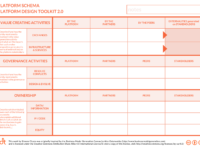
Platform Design Toolkit is based on the tradition of service design thinking and the publishers intend it to overcome the limitations in traditional, linear, business modeling approaches. This methodology is based on a multi-sided, ecosystem based, platform model instead of a traditional product or service design. Those interested in building their "government as a platform" strategy or building a suite of digital or non-digital products or services would likely find value in this approach but…
This toolkit is for people help each other map out the skills, knowledge, resources and capabilities they have in order to respond to, and effect, change in their community.
The Possible Futures Lab of the Information Security Group at Royal Holloway University of London originally developed the toolkit to assist grassroots co-creation in the community of Pallion, Sunderland. They have made their toolkits available to others to adapt.
This toolkit provides guidance for public servants on how to communicate with the public using the simplest and clearest language possible and to ensure that all services are accessible, and meets the diverse needs of all our customers. The guidance is based on Universal Design principles.
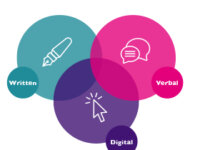
The toolkit contains advice on general writing style principles, verbal and non-verbal communications, design of forms and documents, web and social media content and how to display signage. It features a…
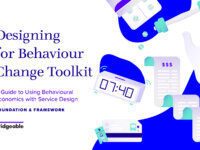
This toolkit outlines Bridgeable’s approach to harnessing behavioural economics (BE) to design better products and services that nudge user behaviour. It combines a service design approach with a BE approach, with the caveat that BE helps identify and tweak pivotal moments of decision making but not overall user experience or strategies.
The toolkit includes an overview of BE as well as an ideation and testing framework incorporating BE principles to move from a current state to an idea future…
This toolkit was developed to help us cope with the rapidly changing world, such as global networks and autonomous drone fleets—that have never existed before. The publishers suggest that we need new stories and new mythologies to tell us how these things fit into our lives and make sense of these transformations.
The toolkit contains a card deck exploring different colored "archetypes" or ways of making meaning and each includes different ways of understanding Interactions, Environments,…
This manual introduces strategic foresight as a practice in the context of the 2030 Agenda for Sustainable Development. It was created with consideration for the resource constraints in developing country contexts, so proposes light-touch and low-cost methods. However, it could easily be applied elsewhere.
The manual features a selection of methods and techniques suited for framing development or policy discussions, but there are many methods and techniques available that are considered part of…
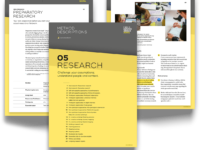
This resource is a method library containing 54 method descriptions for using the key methods in service design. These methods include instructions, guidelines, and-tips-and tricks for activities within research, ideation, prototyping, and facilitation. This collection only contains building blocks. It doesn’t detail how to assemble them into a cohesive design process or how to plan or manage it. The associated (paid) book and curriculum offers this context.
Over a dozen years of use to date, the game represents an accessible approach to introducing "images of the future" as a basic property of both cultures and individuals, and can be used as an introduction for more advanced futures and foresight tools and frameworks. It provides a structure for facilitating conversation among groups of participants and intended for groups. Duration is flexible, but typically runs 30-60 minutes. The resource provides step-by-step guidance for how to run the game…