Toolkit Navigator
A compendium of toolkits for public sector innovation and transformation, curated by OPSI and our partners around the world

The DesignGov experiment was an 18 month initiative of the Australian Public Service to apply design-led innovation to cross-agency problems. This resource is based on the experience of DesignGov and is intended to be a resource for others that might be looking to establish and operate a public sector innovation lab. This resource is offered as a personal contemplation about what should be considered when establishing, running and, possibly, closing a public innovation lab.
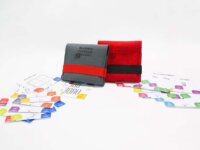
Kickbox is an innovation process that Adobe developed for its own use and then open-sourced so everyone can use it. It is both a process for individuals and a system for deploying that process across an organization at scale. It’s designed to increase innovator effectiveness, accelerate innovation velocity, and measurably improve innovation outcomes. It can also optimize innovation investments by reducing costs compared to traditional approaches. Adobe distributed 1000 physical boxes…
A collection of cards describing methods for planning and executing design research, ideation, experimentation and creation within short iterations (sprints). They split the methods into tasks that follow SCREAM; a methodology which is a modified version of SCRUM, tailored to fit within the publisher's design process.
The card fronts contain basic information, such as activity type, category, and duration. The backs contain basic overviews of the methods and how-to instructions. These are…
A collection of code, tools, and case studies to help United States federal agencies adopt the Open Data Policy and unlock the potential of government data.
This project is meant to be a living document, so that collaboration in the open data ecosystem is fostered, and the continual update of technology pieces that affect update can happen at a more rapid pace. Edits to the content may be made by anyone.
It could provide other governments with examples and starter content for its own open data…
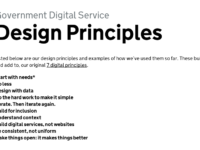
The United Kingdom government's design principles and examples of how they have been used. Each principle includes links to articles with additional explanation and reflections.
1. Start with user needs
2. Do less
3. Design with data
4. Do the hard work to make it simple
5. Iterate. Then iterate again
6. This is for everyone
7. Understand context
8. Build digital services, not websites
9. Be consistent, not uniform
10. Make things open: it makes things better
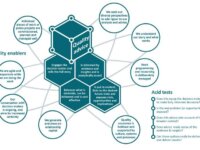
The Policy Quality Framework describes the key characteristics of quality policy advice, as well as the ‘enablers’ of great advice, like considering multiple perspectives, good commissioning, quality assurance processes and work planning.
It is one of three improvement frameworks co-designed for and by the policy community in New Zealand to help government agencies improve their policy quality and capability.
It includes several policy assessments for different stages of the policy cycle and…
A series of 16 individual templates for different service design methods and techniques, plus posters with a guiding methodology for use in your own workshops. The posters do not include much step-by-step guidance so these are best used by people who have used these methods and techniques previously. The publisher's website also includes some case studies. Available in English and Dutch.
This EU Quality of Public Administration Toolbox aims to support, guide, encourage and inspire those who want to build public administrations that will create prosperous, fair and resilient societies. The Toolbox tries to help countries with addressing country-specific policy recommendations and with delivering successful strategies and operational programmes.
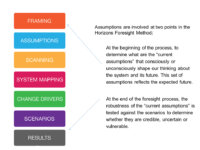
This guide is a facilitation toolkit for staff at Horizons and others interested in practising the Horizons Foresight Method in their own organizations. Its aims are to build foresight literacy in general, to explain the Horizons Foresight Method in particular, and to build capacity for horizon scanning in the Canadian federal government and other organizations. It provides a detailed description of concepts and processes, divided into 6 modules. Modules include facilitation guides, tip sheets,…
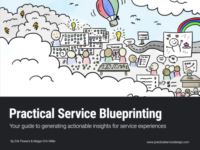
Guide to service blueprinting. The reader analyses their own interaction with service users. Through the tools of personas, scenarios, and the decomposition of a scenario into a blueprint of its elements, the reader can understand and improve their services from a Human-Centred design person