Toolkit Type: Guidance
This resource contains two guides: one about the general field of behavioural economics and another is on developing behavioural interventions for randomised controlled trials (RCTs). The website also contains an academic directory of researchers working in this field.
The term data collaborative refers to a new form of collaboration, beyond the public-private partnership model, in which participants from different sectors — including private companies, research institutions, and government agencies — can exchange data to help solve public problems.
This resource outlines 8 Phases for designing and implementing a data collaborative (partnership) at an institutional level. The online resource includes examples, enablers, tools, and resources for…
This mini-book is based around the Cynefin framework, a contexutalisation and sense-making framework developed by Dave Snowden. The resource provides an overview of the Cynefin framework and use of narrative research, guidance and a tool for developing shared sense-making, and tools and guidance for developing a portfolio of experiments for different types of problems, distinguishing between complicated and complex problems.
The publisher requires a free login in exchange for downloading the…
There is a free and paid version of this toolkit and an associated workshop offered by the publishers. The free version of the kit provides tools to structure your thinking when designing a service that includes machine learning elements. The core idea is that you first describe a user journey in a physical or digital space, and then use the materials from the kit to brainstorm service concepts in that space.
The core materials include:
- A booklet summarising key concepts for designing IA…
The resource was designed to help organisations: develop a clearer understanding of the range of purposes of collaborations, reflect on the partnerships they have established, and focus on ways to strengthen new and existing partnerships by engaging in discussion about issues and ways forward. The resource contains guidance as well as an interactive partnership assessment tool.
Although it was created with the health sector in mind, it is relevant for other sectors as well.
For innovation…
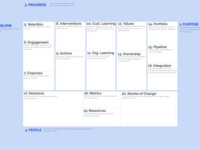
This is a LinkedIn article exploring what a canvas for an Experimentation System should include. It is a way to visualise an experimentation system in a one-page view. It's author says it bring hundreds if not thousands of actions and decisions into context and helps to translate nebulous terms like 'innovation culture' into practical actions. The article offers explanations of the 20 building blocks and offers the canvas via email request.
This resource focuses on inclusive design, a methodology that enables and draws on the full range of human diversity, including those with limited abilities. The resource includes a guide on inclusive design, multiple short-films and a 20-minute documentary, as well as activity cards that follow 5 phases of a design process.
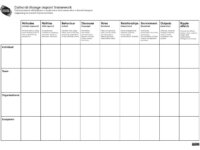
This resource includes a framework, basic guidance and canvas for use in mapping and assessing organisational readiness and capacity development, designing and developing assessment criteria for capacity-building, facilitating strategic dialogue, supporting and assessing the impact of innovation teams and labs, and enabling structured focus on what elements should be prioritised in capacity-building efforts as well as for case production and knowledge sharing.
The Design Process Mini-Guide is five-page document outlining a design process taught at the Stanford d.school. The school gives this resource to students after a short design experience, to help solidify the takeaways and abstract the experience to useful framework. The publishers suggest using the document in conjunction with an action-oriented design experience, such as their related Gift Giving Project and Wallet Project. This resource is on an older archive version of the d.school website.…
The Gift-Giving Project is 90-minute (plus debrief) fast-paced project though a full design cycle, intended to give learners a tangible experience with design thinking. It is intended as a group activity (from 2 to 100+ participants) with a facilitator.
Learners pair up to interview each other, come to a point-of-view of how they might design for their partner, ideate, and prototype a new solution to "redesign the gift-giving experience" for their partner. The resource includes a handout, a…