Skip to content
An official website of the OECD. Find out more
Created by the Public Governance Directorate

This website was created by the OECD Observatory of Public Sector Innovation (OPSI), part of the OECD Public Governance Directorate (GOV).

How to validate authenticity

Validation that this is an official OECD website can be found on the Innovative Government page of the corporate OECD website.

Toolkit

AI4GOV Toolkit

Champion CHAMPION:
Can be remixed
The AI4GOV Toolkit is aimed at fostering a human-centered and systemic perspective towards the development of public services that integrate artificial intelligence in a meaningful way. The toolkit offers a methodology and specific tools for the application of AI in real public sector projects aimed at solving societal needs, considering technology not as an end but as a means for reaching wider strategic objectives. The tools within this toolkit span throughout four main phases of the design…

Toolkit

Transformative Innovation Policy Resource Lab

The Transformative Innovation Policy (TIP) Resource Lab contains over 250 resources (such as tools, interactive canvases and narrative guides) structured across five components: 1. Systems, anticipation and transformative theory of change 2. Experimentation in policies and programmes 3. Evaluation using transformative outcomes 4. Capabilities - personal, organisation, and facilitating contestation 5. Knowledge communities and infrastructures The resource includes lessons for the design and…
Toolkit

Share, Learn, Innovate! Toolkit

The Office of the High Commissioner for Human Rights (OHCHR) created the "Share, Learn, Innovate!" toolkit to present methods, tools and technologies to enhance knowledge sharing. The toolkit acknowledges multiple experiences and perspectives and aims to be a catalyst for action. It collects the explicit knowledge of the organization, making it accessible, while simultaneously connecting tacit knowledge that is not codified but grounded in the experiences of practitioners. The Share, learn,…
Toolkit

Value Network Mapping: A method for unravelling system relations

Basic BASIC:
Allows reuse
Translating global sustainable development goals into concrete actions for systemic change remains one of the greatest challenges of our times, requiring changes in the structures of the sociotechnical systems that define our world. Value Network Mapping helps in getting a grip on the structure of these sub-systems and enables users to identify together intervention points that make sustainability transitions happen. The method helps users co-create such changes, while balancing individual needs…
Toolkit

Collective Intelligence Design Playbook

Champion CHAMPION:
Can be remixed
The Collective Intelligence Design Playbook, created by Nesta, offers a wide range of tools, tactics and methods to engage collective intelligence to solve societal challenges. Through practical instructions and case studies, the Playbook presents ways to orchestrate diverse groups of people, data and technology. It is designed to be applied by teams or groups and features an introduction to help users understand the scope and potential of collective intelligence, practical guidance to sustain…
Toolkit

Ecosystem Mapping

The Danish Design Center created the Ecosystem Mapping tool to help users get an overview of their project stakeholders and potential participants and analyse the motivations, resources and capabilities, that will become valuable for the overall ecosystem. Through its application, users can map all actors (partners, collaborators, contractors, external stakeholders, etc.) in a given ecosystem in order to accomplish its mission. The tool provides users with "Question Cards" to confirm identified…
Toolkit

APS Framework for engagement and participation

Champion CHAMPION:
Can be remixed
The Australian Public Service (APS) Framework for Engagement and Participation provides guidance, principles, and links to interactive tools that support public servants and managers to adopt and improve the participation and engagement of stakeholders and citizens as ways to earn trust and overcome complexity in dealing with society's challenges in the 21st century. Public servants and managers are invited to subscribe to the principles that underpin this vision and actively use this toolkit…
The UserCentriCities (UCC) Service Design toolkit is a curation of handbooks and tools to support the adoption of a user-centric approach in the design of digital public services. Compiled in collaboration with OECD OPSI Toolkit Navigator, it collects the most relevant tools and methods for cities, regions, and municipalities to use. It contains methods and handbooks developed and utilised by the UserCentriCities partner cities and regions network in their own user centric service development,…
Toolkit

Responsible Tech: Self-Assessment Tool

The resource authors define responsible tech as applying an ethical approach when developing, using and distributing new technology in a way that contributes to an environmentally, socially and economically sustainable society. The Responsible Tech: Self-Assessment Tool is an online tool that takes users through a series of structured questions in order to enhance a responsible approach to tech development work. The tool can be used in the intervention, development and distribution of new…
Toolkit

Anticipatory Innovation Starter Kit

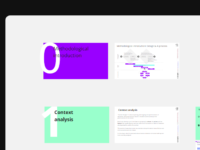
The Anticipatory Innovation Starter Kit (AISK) offers a step-by-step approach to access a set of methodologies and tools to solve organisational challenges in the area of anticipatory innovation governance. Developed by the Experimentation Lab for Public Administration (LabX), part of the Administrative Modernisation Agency (AMA) in Portugal, the starter kit intends to be an actionable tool to envisage and anticipate changes in public sector organisations. Users start in a "Pool of Problems"…