Toolkit Type: Tool/Toolset
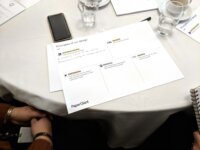
The resource was designed to help organisations: develop a clearer understanding of the range of purposes of collaborations, reflect on the partnerships they have established, and focus on ways to strengthen new and existing partnerships by engaging in discussion about issues and ways forward. The resource contains guidance as well as an interactive partnership assessment tool.
Although it was created with the health sector in mind, it is relevant for other sectors as well.
For innovation…
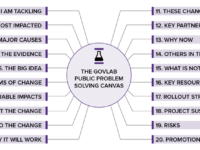
This is a LinkedIn article exploring what a canvas for an Experimentation System should include. It is a way to visualise an experimentation system in a one-page view. It's author says it bring hundreds if not thousands of actions and decisions into context and helps to translate nebulous terms like 'innovation culture' into practical actions. The article offers explanations of the 20 building blocks and offers the canvas via email request.
This resource includes a framework, basic guidance and canvas for use in mapping and assessing organisational readiness and capacity development, designing and developing assessment criteria for capacity-building, facilitating strategic dialogue, supporting and assessing the impact of innovation teams and labs, and enabling structured focus on what elements should be prioritised in capacity-building efforts as well as for case production and knowledge sharing.
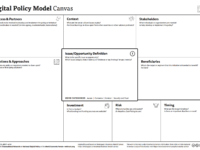
A mashup of the original Business Model Canvas with lean startup methodology built in, this canvas is intended for social entrepreneurs to validate their offering, prioritise what to develop, and message the offering. This could also be used by a government service provider.
The website includes a checklist to evaluate whether you will likely find value in using the canvas.
The Gift-Giving Project is 90-minute (plus debrief) fast-paced project though a full design cycle, intended to give learners a tangible experience with design thinking. It is intended as a group activity (from 2 to 100+ participants) with a facilitator.
Learners pair up to interview each other, come to a point-of-view of how they might design for their partner, ideate, and prototype a new solution to "redesign the gift-giving experience" for their partner. The resource includes a handout, a…
This resource includes a method and guidance for developing and getting comfortable with storytelling to engage your audience and collaborators in your project. It includes an 8 step process to developing and creating a "sticky" story to inspire and persuade others into action. It includes a downloadable guide with examples and tips and tricks as well as a checklist for evaluating your story.
Liberating Structures is a web resource that includes a collection of 33 results-oriented collaboration patterns have been developed and refined through field testing over a 10+ year period in a variety of sectors including healthcare and business.
They are intended to complement conventional practices for organisational design and strategy design. They are designed to be used in an inclusive collaborative setting.
Associated books (for sale) and video guidance is available to assist those…
This is canvas and background guidance around a set of principles for co-design, inspired by the principles developed by the NSW Council of Social Services. The principles are: Outcomes-focused, Inclusive, Participative, Respectful, Adaptive.
The canvas includes an example case study.
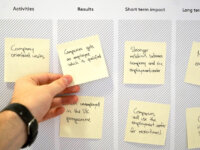
[Now defunct. Link goes to internet archive from 2018, when MindLab closed]. One of the pioneers of public sector design, Mindlab, developed a set of tools to find and define problems as well as new approaches to solving them. This toolset contains some of the most commonly used in the design practice (user journey, pattern recognition, etc).
This resource focuses on inclusive design, a methodology that enables and draws on the full range of human diversity, including those with limited abilities. The resource includes a guide on inclusive design, multiple short-films and a 20-minute documentary, as well as activity cards that follow 5 phases of a design process.