
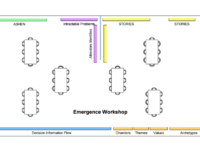
The author provides step-by-step guidance on how to conduct a short term strategic planning workshop based on knowledge management and contextualisation frameworks used by the private company Cognitive Edge. The publisher's suggests that it can be used to conduct pre-hypothesis research project to understand a complex problem. The outputs are comprehensive sets of cultural indicators, knowledge objects (comprising both codified and experiential knowledge artefacts), and large volumes of tangible…
Good For: Practise empathy and active listening

The Design Process Mini-Guide is five-page document outlining a design process taught at the Stanford d.school. The school gives this resource to students after a short design experience, to help solidify the takeaways and abstract the experience to useful framework. The publishers suggest using the document in conjunction with an action-oriented design experience, such as their related Gift Giving Project and Wallet Project. This resource is on an older archive version of the d.school website.…
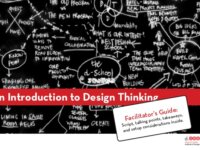
The Gift-Giving Project is 90-minute (plus debrief) fast-paced project though a full design cycle, intended to give learners a tangible experience with design thinking. It is intended as a group activity (from 2 to 100+ participants) with a facilitator.
Learners pair up to interview each other, come to a point-of-view of how they might design for their partner, ideate, and prototype a new solution to "redesign the gift-giving experience" for their partner. The resource includes a handout, a…

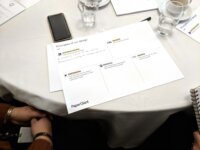
This is canvas and background guidance around a set of principles for co-design, inspired by the principles developed by the NSW Council of Social Services. The principles are: Outcomes-focused, Inclusive, Participative, Respectful, Adaptive.
The canvas includes an example case study.
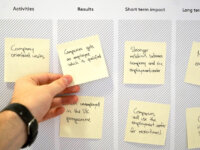
[Now defunct. Link goes to internet archive from 2018, when MindLab closed]. One of the pioneers of public sector design, Mindlab, developed a set of tools to find and define problems as well as new approaches to solving them. This toolset contains some of the most commonly used in the design practice (user journey, pattern recognition, etc).

This resource focuses on inclusive design, a methodology that enables and draws on the full range of human diversity, including those with limited abilities. The resource includes a guide on inclusive design, multiple short-films and a 20-minute documentary, as well as activity cards that follow 5 phases of a design process.
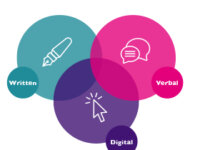
This toolkit provides guidance for public servants on how to communicate with the public using the simplest and clearest language possible and to ensure that all services are accessible, and meets the diverse needs of all our customers. The guidance is based on Universal Design principles.
The toolkit contains advice on general writing style principles, verbal and non-verbal communications, design of forms and documents, web and social media content and how to display signage. It features a…
The SIC learning repository is an online, open resource available for innovators, researchers and policy makers to improve their skills in design for Social Innovation.
The tools section is organised by main activities/actions, including:
RECRUITING SOCIAL INNOVATORS
STAKEHOLDER ENGAGEMENT
IDEATION
PRODUCT/SERVICE DEVELOPMENT
PROTOTYPING
SUSTAINABLE GROWTH AND IMPACT
FUNDING OPPORTUNITIES
For each tool, time commitment and team requirements are listed and each can be downloaded as a PDF.
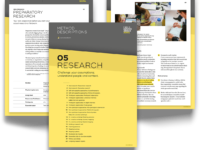
This resource is a method library containing 54 method descriptions for using the key methods in service design. These methods include instructions, guidelines, and-tips-and tricks for activities within research, ideation, prototyping, and facilitation. This collection only contains building blocks. It doesn’t detail how to assemble them into a cohesive design process or how to plan or manage it. The associated (paid) book and curriculum offers this context.
This playbook is an online crash course on service design. It works alongside the 14 points set out in the Digital Service Standard to provide the basics needed to get started on a digital service.
It covers: About service design, Discovery phase, Alpha phase, Beta phase, Live phase, and Team roles