
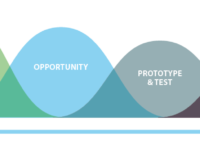
This resource describes a comprehensive method for the BC Public Service (BCPS) to design services for British Columbians, although it is also applicable to other governments.
The Playbook is intended to help ensure public service designers have the necessary tools and corporate support to make change.
It includes an overview of service design, a discussion of when and how to use it, as well as detailed guidance and tools for the various methods used in service design. The methods are organised…
Good For: Practise empathy and active listening
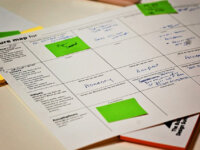
A tool that organizations can use to assess, map and transform their cultures. It is intended at a group activity to guide conversations around outcomes, behaviours, and enablers/blockers. The website also contains guidance for its use. It is intended for a private sector context but non-financial "outcomes" can also be considered when using it in the public sector.

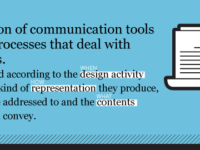
An collection of communication tools used in service design processes that deal with complex systems, organised by design activities, representations, recipients, and contents. The website is the result of the research activity done by Roberta Tassi during her graduation thesis investigating the relation between communication design and service design, starting from the observation of the existing practices in the field of service design.
Each tool contains a description, how-to instructions,…
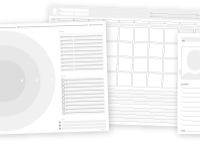
This set of service design resources includes a downloadable zip file of resources created by MrThinkr, such as templates, examples, and guidance on personas, journey mapping, and stakeholder mapping. The website contains video guidance on how to use these methods. In order to download the zip file, you must enter your email. The publisher is also marketing some paid software on their website.

The toolkit includes 5 methods for designing a more inclusive lab. The toolkit begins by guiding users through basic user observation, identification, and categorization processes (observation, interviews,
and personas). It then moves into problem definition and stakeholder prioritization, and finally defines a concrete suggestion for increased
diverse stakeholder governance. It includes templates and examples for each method.
A guided introduction to 14 common service design tools, such as empathy maps, personas, and customer journeys. They are organised by the publisher's methodology: Define, Learn, Solve, Test. Toolkit. The publisher offers a suggested path through the tools but the publisher suggests that each can be used on their own. The toolkit is available via website in exchange for your email address.
This is a collection of methods and activities, based on Hyper Island’s core methodology, for creative collaboration and realising potential in teams or organisations. It’s a collection of methods and activities, based on Hyper Island’s core methodology and is focused on Learning-by-doing (or Experiential Learning), Reflection (or Reflective Practice), and workshop or group facilitation. It includes Hyper Island tools as well as tools from others.
An introduction to service design for public servants, and a set of practical ways to include design methods in your work. This resource was developed for the City of New York but is relevant to other cities, governments, and innovation labs as well.
This resource includes a variety of tools and techniques, enabling government entities to develop initiatives and come up with innovative solutions to enhance the efficiency of the government sector, and improve the services provided by the government to individuals and entities.
The Design Kit resource is both a downloadable PDF as well as online guidance on the different phases of a human-centered design process, organised by Mindsets, Methods (Inspiration, Ideation, Implementation), and Tools. The PDF is only downloadable from the website after creating a user account at IDEO. Website includes instructional videos on the techniques of various user-centered design methods and techniques.