
This resource is an introductory description of a paradigmatic shift in public policy-making from traditional methods to new, innovative approaches. This includes a whole-of-government approach, a refocus on the user, an embrace of complexity, pro-activeness, and collaboration. It describes 7 opportunity areas for innovation in the traditional policy-making process.
Level: Extensive

In this booklet you will find tools to implement the CO-CRE-AR methodology in its three phases: Understanding, Creating and Arming.
CO-CRE-AR moves in spaces of divergence and convergence. The first part invites you to UNDERSTAND in detail the challenge you want to face; the second to CREATE with openness and generate ideas without many restrictions, to then land them and make them concrete in work plans, including the necessary communication elements to "sell" the solution in the organization.

This playbook is an online crash course on service design. It works alongside the 14 points set out in the Digital Service Standard to provide the basics needed to get started on a digital service.
It covers: About service design, Discovery phase, Alpha phase, Beta phase, Live phase, and Team roles

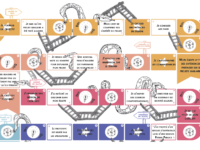
Designed with the assistance of the CNFPT and the DGAFP, this game is inspired by "Chutes & Ladders": a board game where the team must realize the major stages of their project, and sometimes encounters ladders (these "little miracles" that win several boxes at once) and chutes (these pitfalls that push back the project carrier). The resource is in French.
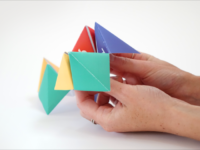
Here you find a selection of the Danish Design Centre’s commonly used tools. It includes information about the methods, instructions for tool use, and printable materials.
The tools are divided in three categories that are used at different stages in the design process - and often in this order: Explore, Co-create, and Give the future concrete form.
Explore helps the participants to open up and get around all aspects of the issue. Co-create contains tools that help participants get in-depth…
Produced as part of the Making Sense project, which draws on nine citizen sensing campaigns in Holland, Kosovo and Spain in 2016 and 2017. Based on that experience, the publisher developed a framework and methods and tools for citizen participation in environmental monitoring and action. Their approach is bottom-up and participatory, which the publishers call "citizen sensing."
The publishers offer a software platform for collecting data, methodologies for making sense of data, and best…
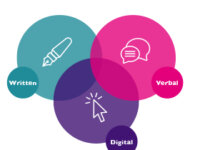
This toolkit provides guidance for public servants on how to communicate with the public using the simplest and clearest language possible and to ensure that all services are accessible, and meets the diverse needs of all our customers. The guidance is based on Universal Design principles.
The toolkit contains advice on general writing style principles, verbal and non-verbal communications, design of forms and documents, web and social media content and how to display signage. It features a…
An A/B test measures and compares the effectiveness of different versions of a program feature, service, or communication. This interactive tool helps users prepare for A/B tests, create random assignments of users to A or B, and helps users analyse which was more successful. The publishers suggest that this approach can be used by governments to optimize outreach materials, communications and engagement, program features, and processes (e.g., applications, payments).
The guide offers practical guidance to local government officials on how to build a culture and practice of innovation and give local leaders an action-oriented framework for breakthrough
innovation. It lays out nine “Imperatives” towards this end, with concrete action steps for each to help cities get started, along with illustrative case studies.
This document gives you the information you need to create your own lab. This could be a UNICEF lab—or could simply be a space of creativity that is aimed at solving significant global problems through the application of dedicated local resources.
It provides background on labs, defining a lab's purpose, budget and scoping, and examples of different lab models (outreach/training, product development, service development, operational research, and content broadcasting).
It also includes…