Toolkit Format: PDF publication
This resource describes open government good practices and presents them to encourage further adoption and innovation. The publisher's goal is to help government reformers and civil society partners in improving the quality and output of co-creation processes across the Open Government Partnership (OGP). The resource was created to aid OGP partners but is applicable to others interested in open government.
The Toolkit contains content organised in a Question & Answer format, a matrix of…
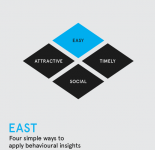
EAST is a framework and summary of the Behavioural Insights Team's knowledge of behavioural science, developed for busy policymakers. It is based around principles of making actions Easy, Attractive, Social and Timely (EAST) applied to a 4-step process: 1. Define the outcome, Understand the context, Build your intervention, and Test, learn, adapt.
It is a more simplified version of the publisher's prior MINDSPACE framework. The resource includes overall guidance and case studies.
This report identifies five common pitfalls that organisations fall into when using theory of change, and walks through five rules of thumb that will help organisations to use the approach to tackle complex problems. The report includes case studies demonstrating these pitfalls and rules of thumb in practice.
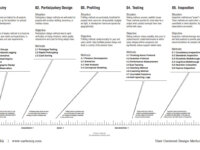
This is one of the first collections of user experience methods. It describes and analyses user experience design methods by costs expended, time required, resources required, expertise required, and quality of data.
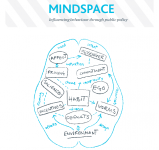
The MINDSPACE report is used by the Behavioural Insights Team as a framework to aid the application of behavioural science to the policymaking process. It is a predecessor of the more simplified EAST framework. It describes four actions that should underpin government‟s attempts to change behaviour: Enable, Encourage, Engage and Exemplify. It includes a users guide for understanding what affects human behavior and describes the MINDSPACE framework through several case studies.
The IIDM Toolset was designed as a guide for organisations and individuals seeking to build the capacity of problem solvers to innovate and collaborate more effectively. The Toolset addresses two key components: (1) cultivating an innovator’s mindset, and (2) improving the processes that support decision making along the journey from idea to impact. The publisher asserts that both of these ingredients are vital for decision making to yield improved innovation. The Toolset offers users…
This toolkit was developed to help us cope with the rapidly changing world, such as global networks and autonomous drone fleets—that have never existed before. The publishers suggest that we need new stories and new mythologies to tell us how these things fit into our lives and make sense of these transformations.
The toolkit contains a card deck exploring different colored "archetypes" or ways of making meaning and each includes different ways of understanding Interactions, Environments,…
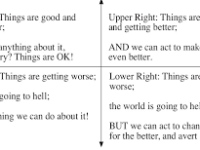
Over a dozen years of use to date, the game represents an accessible approach to introducing "images of the future" as a basic property of both cultures and individuals, and can be used as an introduction for more advanced futures and foresight tools and frameworks. It provides a structure for facilitating conversation among groups of participants and intended for groups. Duration is flexible, but typically runs 30-60 minutes. The resource provides step-by-step guidance for how to run the game…
This manual introduces strategic foresight as a practice in the context of the 2030 Agenda for Sustainable Development. It was created with consideration for the resource constraints in developing country contexts, so proposes light-touch and low-cost methods. However, it could easily be applied elsewhere.
The manual features a selection of methods and techniques suited for framing development or policy discussions, but there are many methods and techniques available that are considered part of…
The toolkit is designed to be both informative and actionable - helping integrate the latest research in human behavior and decision making into practice. The toolkit features five tools to help designers apply findings from the field of behavioral economics to their practice in order to provide a head start on framing research as well as developing new strategies for solving user problems.
The toolkit includes:
Reference Cards: behavioral economics research findings organized and…