
The resource is intended for those working in the international development or social impact space to assesses the future impact that innovation can deliver in a system. It focuses on three "systems": The Problem Space, The Innovation Space, The Context.
It's goals are to precipitate better understanding of the problem of focus and the context in which it exists, assess enablers and barriers
to innovation, track system change over time, and assess the impact of a program ex post facto. It…
Toolkit Navigator
A compendium of toolkits for public sector innovation and transformation, curated by OPSI and our partners around the world

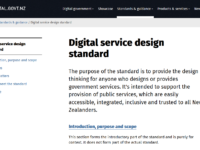
The purpose of the standard is to provide guidance for those in the New Zealand government or anyone who designs or provides government services regarding the provision of accessible, integrated, inclusive public services. It includes principles, rationale, information on how to meet the standard, related implementation guidance and resources, and a glossary.

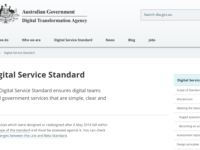
The purpose of the standard is to provide guidance for those in the Australian government or anyone who designs or provides government digital services regarding the provision of simple, clear and fast services. It includes 13 criteria, rationale, information about meeting the standard, design principles, service design and delivery process, related training and guides, and a glossary.
The resource also includes downloadable posters.

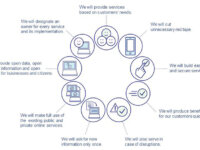
Established in 2016, these 9 principles provide guidelines for information sharing and interfaces, operating models, rapid service development and preparedness within the Finnish government and beyond.
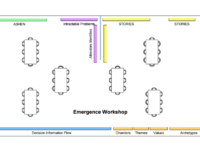
The author provides step-by-step guidance on how to conduct a short term strategic planning workshop based on knowledge management and contextualisation frameworks used by the private company Cognitive Edge. The publisher's suggests that it can be used to conduct pre-hypothesis research project to understand a complex problem. The outputs are comprehensive sets of cultural indicators, knowledge objects (comprising both codified and experiential knowledge artefacts), and large volumes of tangible…
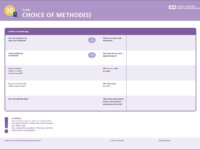
This resource is a series of tools to help clarify, plan, collect, and use data, information and evidence to evaluate an innovation as well as spread the learnings and results. It is intended to be used throughout a project to incorporate evaluative and intentional processes and feedback loops.
This is a knowledge base containing existing societal and public sector needs, emerging trends, methods, tools, technologies and applications. They are filterable by asset type, need, and type of trend.

There is a free and paid version of this toolkit and an associated workshop offered by the publishers. The free version of the kit provides tools to structure your thinking when designing a service that includes machine learning elements. The core idea is that you first describe a user journey in a physical or digital space, and then use the materials from the kit to brainstorm service concepts in that space.
The core materials include:
- A booklet summarising key concepts for designing IA…
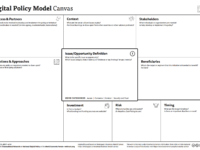
This canvas guides policy makers to derive specific policies and regulatory mechanisms in an agile and iterative manner – integrating both design thinking and evidence based policy making. An associated White Paper provides background on the approach.
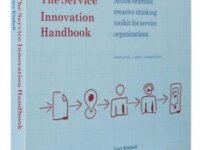
14 methods and 3 recipes suggesting how to combine them, associated with a guide book available for sale by the toolkit publisher.
Accompanying each method: Purpose, Outcomes, How to do it, and Tips as well as a worked example, to help readers understand how the method and associated template can be used at the early stage of designing an innovative service.