

This project presents the new approach in service delivery, through which we enabled deaf and hard of hearing persons to have an access to the most essential services, such as emergency call and civil registry services. Tireless engagement of deaf community in service design resulted in elaboration of user centered and People with Disabilities-tailored services, enabling beneficiaries to contact emergency services using a text-based or a video calling system and squire necessary civil documents…
Innovation Tag: Process Improvement/Simplification
The Trinidad and Tobago Diamond Standard Certification Programme (TTDS) was launched in 2013 as the National Standard for excellence in public service delivery. The programme certifies government services that demonstrate strong commitment to meeting citizen needs.
The system in the Kolding Municipality in charge of providing medical benefits underwent a comprehensive design driven innovation process aiming for better and more efficient service in 2015. Min Plan gives citizens an intuitive understanding of the medical benefit system, just as it empowers them to take responsibility for their own case, making it a successful journey through the system. The results currently show a 38% reduction in complains from citizens and 3 million euro saved a year.
ADAPT was established to increase awareness and use of novel policy tools (e.g. Prizes, Open Policy Making, AI, Experimentation, etc.) across the ministry. Instead of using the typical research, write, consult model for building organization-wide policy, the team a Lean Startup methodology.
The Korean government has implemented a program dubbed the One-stop Customized Lifecycle Services (OCLS) for heirs and expectant mothers, which was created by integrating existing services. With the OCLS in place, people no longer have to visit multiple government offices and they can take care of various issues at once. The government has also benefited from reduced costs and plans to emulate this success in other areas.

The State Environmental Service of the Republic of Latvia has invented mobile application for reporting environmental violations. The purpose of this app is to increase awareness on environmental problems and make reporting much easier for society. Users can apply environmental complains using mobile application and keep tracking solution of the problem.
The Digital Mobile Key is the Portuguese mobile eID solution, for secure authentication in public & private websites.
Instead of relying on different usernames/passwords for each entity, or using their eID Card, citizens now use the Digital Mobile Key, made of a single 4 digits PIN + an OTP(by SMS, email or messaging platform), or a push notification (Digital Mobile Key app)
In addition to authentication, Digital Mobile Key also allows digital signatures, both in a personal or a professional…
Case Study
National digital Identity and legally binding e-signatures based on Mobile-ID technology branded…
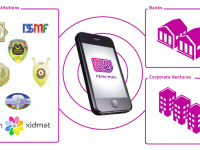
Asan Imza is the world’s fastest growing national digital identity in the form of Mobile-ID, which is secure, trusted and issued by the government of Azerbaijan. Based on PKI (a public key infrastructure) it is an irreplaceable tool empowering across all sectors, from public to private, including financial institutions and Mobile Network Operators, allowing to digitally verify your identity and create signatures equal to handwritten counterparts, regulated by law.
The Michigan Economic Development Corp (MEDC) teamed up with private partner Patronicity to launch a first of its kind crowd-granting program to help create vibrant communities throughout Michigan. The crowdgranting model streamlines the granting process, increases community engagement and results in more sustainable projects that better serve and impact the communities they are within.
Of the 170 completed projects, 165 of them exceeded their crowdfunding goal at a ratio of total private…
Korean government has been calling for the innovation of education and training system to narrow the gap between school education and employers’ requirements and to address the high youth unemployment rate issue.
The Ministry of Employment and Labor and the Human Resources Development Service of Korea introduced the Work-Learning Dual System in 2013.
It was adopted to get rid of mismatches between school education and workplaces based on the National Competency Standards led by companies.