

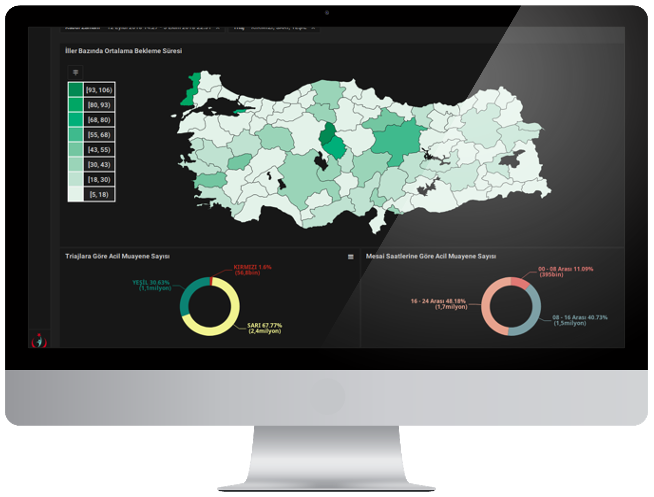
Developed by the Ministry of Health to analyze data flowing from all healthcare facilities in real time, SINA is an advanced, big data-driven decision support platform that enables real-time data visualization, interpretation, and comparison. Integrated with the AI assistant JAS in 2026, SINA allows users to gain insights by asking questions in natural language. By leveraging big data and causal analysis, SINA improves health policies, service delivery, and public health outcomes.
Innovation Summary
Innovation Overview
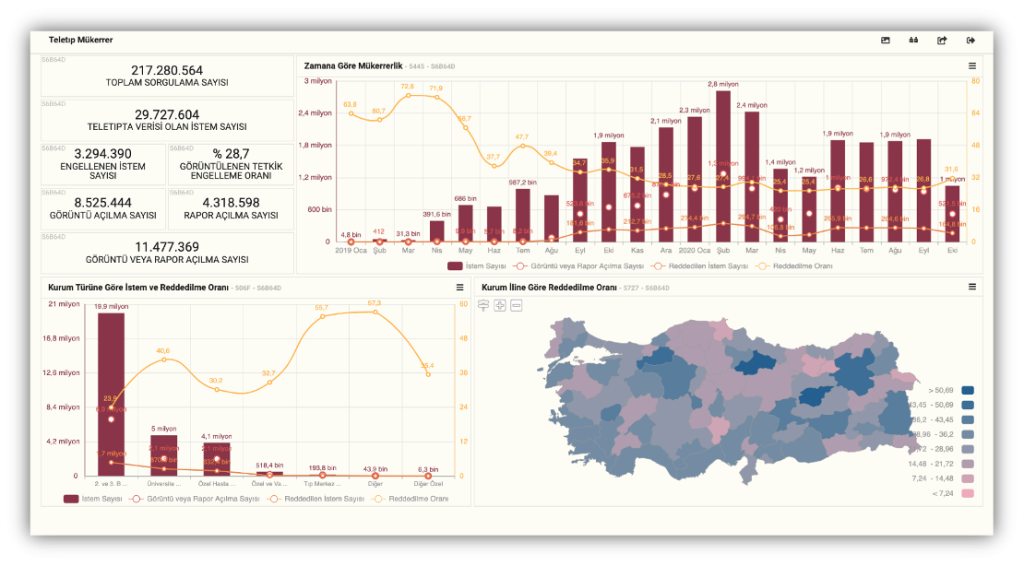
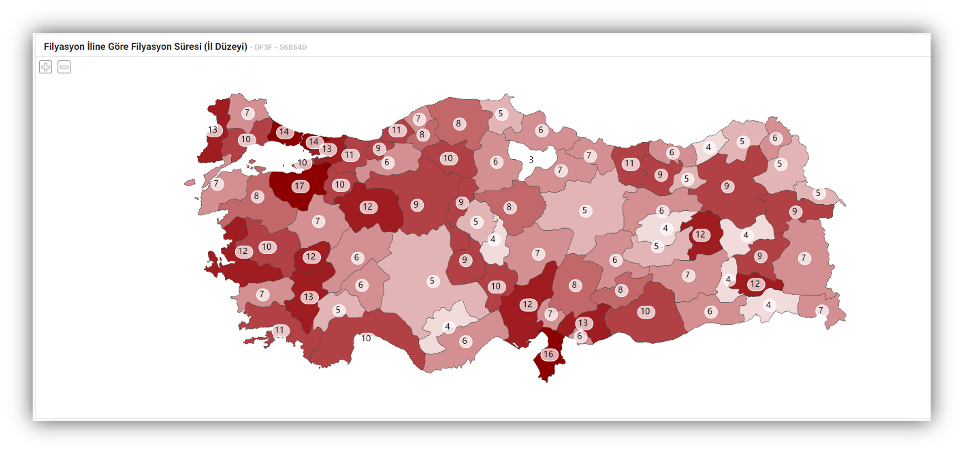
With a current population of over 85 million, Türkiye’s healthcare system consists of tens of thousands of facilities, ranging from single-doctor clinics to large urban hospitals, and from mobile health units to mobile health stations. As the entity responsible for delivering healthcare services nationwide, the Ministry of Health tested numerous different business intelligence tools up until 2018 to enable decision-makers to effectively utilize the data generated by this massive system; however, none of them met the requirements in terms of scale, performance, and usability. Launched in 2018, the SİNA project serves as a comprehensive and integrated big data platform that connects multiple databases with data from all healthcare facilities across Türkiye. SİNA visualizes data through a single interface and provides real-time filtering, in-depth analysis, and comparisons. It delivers dynamic reports for healthcare professionals, decision-makers, and managers at healthcare institutions, including state hospitals, family doctors, and university medical centers. The platform integrates with numerous critical national healthcare systems, such as e-Nabız (EHR/PHR system), MHRS (National Appointment System), HSYS (Public Health Management System), TELETIP (Telemedicine System), and MELİS (Central Laboratory System).
This comprehensive integration enables SİNA to process and analyze big data in real time, providing rapid access to critical information. It aggregates clinical records, financial data, performance metrics, and disaster management information. Reports generated by SINA support policy development, resource planning, service delivery optimization, budget management, and performance evaluation. SİNA’s core strength lies in its ability to transform big data into actionable insights, enabling fast, accurate, and data-driven decision-making. Its real-time reporting and visualization capabilities help shape health policies and improve field operations. By analyzing the root causes of health issues and comparing Türkiye’s health indicators against global standards, SİNA supports design effective interventions and improve the quality of healthcare services.
As of 2025, SINA manages over 200 TB of data and serves 500,000 users with over 8,000 concurrent accesses. With the integration of JAS (Generative AI Assistant) into the SİNA project in early 2026, the platform has gained capabilities for asking questions in natural language, automatically generating visuals, and providing AI-powered data explanations. JAS has been specifically trained on SİNA’s data structure and healthcare terminology. Data security is ensured at the highest level through an innovative solution that prevents sensitive health data from leaving the corporate infrastructure, thanks to on-premise AI models.
Innovation Description
What Makes Your Project Innovative?
SİNA is one of the world’s largest-scale health business intelligence applications with over 200 TB of data under management.
As a BI platform that serves 500,000 users simultaneously and collects real-time data from healthcare facilities across the entire country, it is unparalleled in both scale and scope. the platform offers not only reporting but also predictive analytics.
It provides clinical decision support ranging from emergency department visit forecasting to calculating mortality risk based on comorbidities.
Thanks to the JAS AI assistant, healthcare professionals without technical expertise can derive value directly from the data by asking questions in natural language and generating automatic visualizations.
As an in-house project, it responds very quickly to the MoH's changing needs. During the pandemic, real-time monitoring dashboards were deployed within a week and provided data support for critical decisions, from vaccine prioritization to drug efficacy analysis.
What is the current status of your innovation?
SİNA has been an indispensable part of Türkiye’s e-health ecosystem since 2018. Having moved beyond the project phase, it has become a cornerstone of the digital health transformation. SİNA analyzes data from all stakeholders, it is continuously updated and actively conducts real-time monitoring, and evidence-based policy development processes through its big data infrastructure. SİNA’s success model provides a reference framework that can be adapted for other public institutions as well.
Innovation Development
Collaborations & Partnerships
In the development process led by the MoH, public institutions (hospitals, family physicians), universities (scientific research), and technology providers (open-source coding) are collaborating. This multi-stakeholder structure is critical for establishing inclusive ICT systems by ensuring that data is collected in a single central location. Through these partnerships, data diversity has been ensured, and the financial and technological sustainability of the system has been secured.
Users, Stakeholders & Beneficiaries
Users benefit from SİNA’s innovative technology in the following ways:
Public Officials and Decision-Makers develop data-driven strategies and manage resources efficiently.
Healthcare Professionals monitor patient outcomes with real-time analysis, make predictions, and improve service quality.
Citizens (Beneficiaries) receive more effective healthcare and gain access to early diagnosis opportunities.
Academics (Beneficiaries) utilize outputs based on anonymized datasets for scientific research.
Innovation Reflections
Results, Outcomes & Impacts
SİNA’s main objective is to improve the effectiveness of the healthcare system and public health through data-driven policies. The system employs its own statistical modeling methods for impact measurement. With SİNA, health data has become more accessible, and many healthcare units have begun generating and visualizing their own reports. During the pandemic, the platform provided real-time case tracking dashboards to all healthcare institutions, ensured the prioritized vaccination of high-risk citizens through a vaccination prioritization algorithm. Also, budget optimization was achieved through the proper management of financial resources, and access to services was facilitated by directing resources to the areas where they were needed.
Challenges and Failures
The greatest challenge encountered during the development process was the issue of user adaptation during the transition from previous BI tools. This challenge was overcome through a creative approach: at the end of 2017, a prize-winning hackathon was organized—a format not yet widespread in Turkey—and the most frequently used applications were assigned to groups, with participants expected to redesign these applications on SİNA. This approach not only ensured employee adoption of the platform but also completed the migration of the most critical reports. To integrate and maintain the quality of massive, complex datasets from various organizations, strict data privacy policies and access control mechanisms were implemented.
Conditions for Success
SİNA’s sustainable success is built on a robust institutional framework that is fully aligned with Turkey’s digital health strategies and policy priorities. Financial sustainability is ensured through regular budget allocations; the process is supported by clear governance and oversight mechanisms covering data security and ethical use. The project’s technological backbone is continuously updated thanks to the expertise of specialized teams from diverse disciplines such as medicine, statistics, and software engineering. A leadership culture that minimizes risks while remaining open to innovation has ensured that the system does not remain merely a project but serves as the cornerstone of the digital health transformation.
Lessons Learned
1) In large-scale public BI projects, user adoption comes before technology. Participatory methods, such as hackathons, are far more effective than traditional training.
2) Domestic production provides a critical advantage in responding to the rapidly changing needs of public institutions—the pandemic has proven this.
3) Data democratization is possible not only by providing tools but also through continuous training and encouragement.
4) For data sovereignty in GenAI integration, on-premise model support is indispensable, especially for sensitive health data.
5) During crises (such as a pandemic), an established data infrastructure is lifesaving.
Anything Else?
SINA, a comprehensive data analysis system developed on the domestic business intelligence platform TURBOARD and continuously improved since its launch in 2018, successfully passed its major test during the COVID-19 pandemic, proving its effectiveness. By providing real-time tracking screens to all of Türkiye just one week after the first case was detected, it concretely demonstrated the value of pre-established data infrastructure during times of crisis. This experience proved that public health business intelligence platforms can be positioned not only as reporting tools but also as active crisis management tools.
Status:
- Diffusing Lessons - using what was learnt to inform other projects and understanding how the innovation can be applied in other ways
Innovation provided by:

Media:
Date Published:
29 September 2026