

An innovative maritime communication system enabling:
1. Invisible and unidentifiable VHF communication becomes visible in real time with one click.
2. A ship's past routes and/or frequently navigated routes, which were previously unrecorded, will be made known through big data-based analysis that fully reflects the ship's characteristics and general routing patterns.
3. Invisible voices will be made visible through an automatic transcription system based on voice recognition.
Country: Korea

With the rise of single households and an aging population, society is demanding a guarantee for healthy living and welfare services. The district has launched customized caregiving services using KakaoTalk messenger, mobile phones, and AI speakers to promote the health and well-being of the socially vulnerable class in particular. To deal with the issue of solitary death, the district utilized their strength in information and communications technology to tackle the issue.
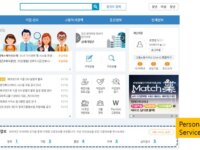
It is difficult for job seekers to identify the employment information that applies to them. "The Work" is a service provided through 'Work-Net', Korea's public jobs portal network. The service uses AI technology to analyze job seeker data and to provide employment infortmation that is tailored to each user. The service offers recommended information to job seekers in six job-related categories. By using the service, the time it takes to search for the information is reduced drastically.
The official dashboard that presents the current status of the COVID-19 epidemic in Korea at the national, provincial and municipal level from official reports by the Ministry of Health and Welfare (MOHW) including a daily monitoring situation update(number of confirmed cases, released from quarantine/discharged healed, isolated in treatment centers/hospitalized and deceased).
Datasets of current status of all testing clinics (sample collection availability, provinces, municipalities, medical institution names, addresses, and phone numbers) that are in operation as of the reference date
This dataset provides operation information on hospitals such as secured hospitals against COVID-19 inspection, clinics and testing hospitals for COVID-19.
Covid-19 Response
Release of Open API dataset for the availability of public masks at designated stores
The official daily public mask stock information of each vendor(pharmacy, post office and designated mart) is provided including mask stock, address of vendor, warehousing of mask stocks and etc. Datasets are available based on address and coordinates(latitude / longitude) by vendor and region.
Datasets are collected by HIRA and then are processed (e.g. combine GPS Coordinates for the address of each vendor) by NIA and also released with an Open API format on the central open data…
The Korean government is releasing open government data on public services in response to the COVID-19 outbreak as follows: (a) Smart and digital library data (published by the Ministry of Culture, Sports and Tourism): This dataset contains information relating to the following attributes: name, location and URL of the library. (b) Online public lecture data via APIs (published by the Ministry of Education): This dataset provides information on the online public lecture which is freely available…
The Korean government has released the following government data via APIs in response to the COVID-19 outbreak: (a) Current oversea saftety security status and immigration data relating to the COVID-19 by country and region/city. (b) Comprehensive statistics data for confirmed cases or patients of COVID-19 infection in South Korea by region, sex and age group. (c) Disinfection of public places by local government in the country (in progress).
The close contacts under self-quarantine are linked to their one-on-one assigned government staff through an innovative ‘safety protection app,’ which allows the staff to monitor their symptoms twice a day, and be alerted when self-quarantine orders are broken. This tracking of the phone’s GPS location is done only with the consent of the close contacts.
Those under self-isolation are banned from leaving the country regardless of whether or not they develop symptoms. Those violating…