
This guide outlines BETA’s approach to developing behavioural interventions for randomised controlled trials (RCTs), based round 9 guiding questions through four project phases:
Discovery, Diagnosis, Design, Delivery. The guide is designed to primarily help with the discovery and diagnosis phases.
It also includes basic guidance on setting up an RCT.
The website includes an academic directory of those working in the behavioral economics research community.
Global: Behavioural Insights
Toolkit
Implementation Guidance for Executive Order 13707: Using Behavioral Science Insights to Better Serve…
Behavioural insights (BI) is an inductive approach to policy making that combines insights from psychology, cognitive science, and social science with empirically-tested results to discover how humans actually make choices. Driven by experimentation and piloting, BI challenges established assumptions of what is thought to be rational behaviour of citizens and businesses, informing decision makers of the “actual” behaviours driving economic or societal outcomes. Behavioral economics, a…
Case Study
Integrating Design and Behavioural Insights to increase the take-up of an education savings program…
The Canada Learning Bond, a government education savings program providing a financial incentive to low income Canadians, turned to behavioural insights (BI) to tackle persistent low take-up. Following unsuccessful BI trials based on academic literature and expertise, we turned to Design. In a Government of Canada first, combining lessons learned from human centred design processes including stories from citizens and BI we developed outreach that significantly improved the take-up of the Bond.
Under the Public Sector Trial Scheme, this project aims to examine how to enhance the drivers' behavior by trial on the public sectors' vehicles by using driving safety modules - Safematics Smart Safety System (4S Solution) and Advanced Driver Assistance Systems, or ADAS to help drivers in the driving process. Through this, the government has a way of improving drivers' driving behavior and get more useful data to study the road design in urban settings.
Case Study
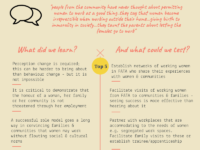
Positive Deviance Pilot: strategies for enhancing women’s public participation in Pakistan’s…
UNDP wanted to understand what strategies women outliers or “positive deviants” in remote and deeply conservative areas which have minimal technology coverage, used to successfully join the workforce, become educated and serve their communities. Positive deviance is an experiential problem-solving approach that identifies locally designed solutions and ensures narratives of the outliers are understood before designing a programme; this is critical for designing behavioural change…
This programme was developed to address critical strategic challenges in the Criminal Justice Sector in Ireland so as to enhance sectoral leadership and public value. A cross agency collaborative learning and implementation methodology was used. High profile reviews of deep seated cultural and procedural challenges have inspired this programme. The IPA and agencies across the criminal justice system have taken an innovative approach to collaboration, learning and implementation. .
The Colombian Public Innovation Team ran a trial aimed to improve the quality and quantity of food served in the Colombian government’s school meals programme (PAE). It combined SMS messages to encourage parental engagement in the programme and lighter audits by a third party (local university students). Behavioural insights were applied to inform message design. The project included a learning phase to test and adapt elements of the intervention and an experimental evaluation (RCT) in the…
NRCan's Office of Energy Efficiency (OEE) Social Innovation UnLab (SIU) is working with program colleagues and Carrot Insights to deliver an energy efficiency rewards pilot via the Carrot Rewards mobile app. Our hypothesis: Engaging Canadians on their smartphones and gamifying learning and action will improve awareness and adoption of energy-efficient behaviours. The pilot is delivering results and entering its third phase this year (2018).
Carrot Rewards is a platform promoting healthy living and public engagement that leverages behavioural economics, mobile tech and the power of loyalty programs to motivate and educate users to make better everyday lifestyle choices for themselves, their families and the planet. Created in collaboration with public sector agencies, leading Canadian health NGOs and the private sector. With over a million downloads, Carrot is driving sustainable positive behaviour change on a population scale.