
Skip to content
An official website of the OECD. Find out more
Created by the Public Governance Directorate

This website was created by the OECD Observatory of Public Sector Innovation (OPSI), part of the OECD Public Governance Directorate (GOV).

How to validate authenticity

Validation that this is an official OECD website can be found on the Innovative Government page of the corporate OECD website.

View as: Map

Filter by:

Countries

Level of government

Sector

Year of launch

Stage of innovation

Recognition

Innovation Tags

Innovations:
0
This website, as well as any data and map included herein, are without prejudice to the status of or sovereignty over any territory, to the delimitation of international frontiers and boundaries and to the name of any territory, city or area.
When artificial intelligence (AI) is unable to achieve required accuracy levels in biomedical analysis involving very large data sets, the models are often discarded and the research is severely hindered. To solve this problem we created a crowd-powered citizen science game, Stall Catchers, to integrate the cognition of public volunteers with AI methods to achieve rapid, expert-like analysis of Alzheimer's research data aimed at accelerating the discovery of a therapeutic treatment.
The Busan Port Authority (BPA) has completed the two innovative projects utilizing the features of sea port, one is ‘piezoelectric power generation system’ and the other is ‘construction wastes recycling project’. Both the piezoelectric power and the recycled construction wastes have been assessed not only to contribute to the improvement of environment, but also, to reduce construction cost. The BPA plans to share the gained outcomes of those projects with other domestic and foreign…
The Mayor of London is piloting how human centered design and systems thinking can fuse with a missions-orientated approach to make the city a better place to live, work and visit. Designing London's Recovery seeds a portfolio of radical innovations cutting across policy areas, embedding future resilience and redefining good growth by deconstructing silo working, fostering a design-led collaborative and inclusive policy ecosystem, and sparking creativity to create further systemic impacts.
Transparency is a key driver of responsible innovation and improved public trust in governments’ use of data and algorithms. The UK’s Algorithmic Transparency Recording Standard helps public sector bodies provide clear information about the algorithmic tools they use and why they’re using them. The Standard is one of the world’s first policies for transparency on the use of algorithmic tools in government decision making and is internationally renowned as best practice.
Aides Jeunes, the aid simulator on the 1jeune1solution.gouv.fr website, was developed to combat the lack of access to rights in France. In just a few minutes, it allows people to see what aid they are entitled to, and to facilitate their aid application process. To date, it contains more than 700 forms of assistance and allows 80,000 people to be directed each month.
In order to implement innovative solutions in the city of Córdoba under an open innovation approach, the local government launched the Córdoba Smart City Fund, the first Govtech fund in Latin America, to invest and partner with impact startups that contribute to the development of a smarter, more inclusive and sustainable city.
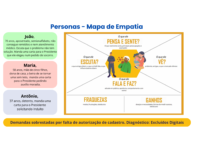
The General Ombudsman Office/CISET/SG/PR (OUVPR) is considered, by part of the population, the highest instance of support for solving problems of access to public services. Among the different social profiles that seek assistance, a large portion of "digitally excluded" stands out; according to IBGE (2018) they represent 25.3% of the Brazilian population. The innovation was due to the unprecedented automation of the process, enabling isonomic treatment of the demands of the "digitally…
"Our Europe, Our Future" is a vast consultation of young people in France and Germany carried out in the framework of the Conference on the Future of Europe. 95,000 young people from both countries expressed their priorities for Europe in two consultations: one carried out on the initiative of the French Ministry of Europe and Foreign Affairs, the other in cooperation with the Franco-German Youth Office and with the support of the German Foreign Ministry.
Those who are now teenagers will be in charge of resolving complex problems in 2050, in particular those related to the climate crisis and its impact on cities. They will need to be equipped with soft skills to develop generosity, creativity or teamwork; unfortunately, traditional schools are not prepared for this task yet. The Mayor's office from Suba, Bogotá, in alliance with te Bogotá Lab iBO and with the World Bank, developed an experiment to test a gamified program that uses ICT to…