
The Open Innovation Team was created by an official inside government to deepen collaboration between policymakers and academics. Policymakers from across government approach the team looking for evidence, analysis, new ideas, or challenge from outside voices. The team connects them with experts and organises workshops, writes reports and provides reviews of evidence. The purpose of the team is to open up the policy process to outside experts, and help ensure policy is anchored in evidence.
Country: United Kingdom
The City of London Corporation and the Financial Conduct Authority are collaborating on a Digital Sandbox Pilot to support financial services innovation that responds to the challenges of Covid-19. The pilot trials features in a digital testing environment that support early stage technology development and quicker innovation.
The pilot is open to technology solutions that address one of three key challenges exacerbated by Covid-19: preventing fraud and scams, assisting the financial resilience…
In the Northern Ireland Civil Service, over 70% of absence days are due to staff on long-term sick (absences lasting 20 working days or more). Using behavioural insights, the Lab designed a new suite of letters to support employees when they go off sick. The letters reject traditional formal approaches of absence management in favour of empathy, clarity, and empowerment. Both line managers and staff feel the letters are a huge help in providing the support they need when off sick.
COVID-19 has put a spotlight on the importance of data infrastructure to ensure effective data sharing (data quality, validation, matching, use of identifiers), as well as the effectiveness of using digital tools and practices to deliver important, cross-government services. As part of the UK government’s response to the pandemic, five government departments came together to set up a National Shielding Service to deliver care and food supplies to approximately 2.2m people in England who were…

Homelessness is spiralling in the UK, and people want to help but are unsure how and no longer carry cash. In partnership with Mayor of London, TAP London has installed 100 contactless giving points across the city, enabling Londoners to give a £3 tap to support local homelessness services.
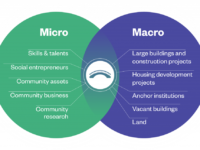
USE-IT!, Unlocking Social & Economic Innovation Together!, is a whole neighbourhood approach to addressing urban poverty.
It innovates by building bridges between the places, the people, the public sector, the private sector and civic society partners in a community so they can co-produce solutions to poverty that unlock opportunities and that fits their needs.
By doing this, USE-IT! works by respecting what is already there in a community rather than by assuming what needs to change.
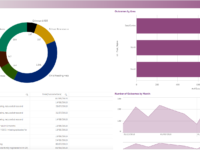
Insight Bristol is an interagency analytics hub between Bristol City Council and Avon and Somerset Police. Its core creation is a database of families' risk and vulnerability indicators, together with targeted risk modelling, which has been embedded into operational practice. This has created a fundamental shift in public sector working by developing a proactive approach to early intervention, saving millions of pounds of public money and improving outcomes for children and families.
Covid-19 Response
The UK’s Lottery Fund has created an Emerging Futures Fund for civil society projects for the…
The National Lottery UK's Community Fund has created the 'Emerging Future Fund', to help communities move towards recovery and renewal after the impact of COVID-19, and draw on all the creativity we've seen in communities and across civil society.
As such, they have set up a UK-wide fund of GBP 1 million, with individual grants ranging between GBP 20,000 - 50,000, for organisations to look at how things are changing, what is needed in this transition, and what is possible in the future.
Covid-19 Response
Cambridge University (UK) students organise #CamvsCovid hackathon for small local businesses
MPhil students from Cambridge University organised a hackathon, #CamvsCovid, to seek solutions to problems stemming from COVID-19. Entries focused on local shops, the virtual shopping experience and remote health diagnostics.
Each team entering the event had 72 hours to draft its response to a pressing problem by video and text, and their 750-word text solution went through a juried review process. All the 750-word solutions, which totaled 11 entries, are being assembled into a portfolio.
Crowdless is helping people make informed decisions and navigate more safely as they carry out their essential tasks, providing real-time live data on the busyness of essential places that people need to visit, such as supermarkets and pharmacies thanks to combination of existing data sources and crowdsourced data to ensure that users have real-time information on how crowded places are.