
The municipality of Zuidhorn (now Westerkwartier) created the Child Package, based on the principles of Blockchain. The Child Package is a scheme intended for children from low-income households. Residents can log in on a website and use a QR-code to pay for child products at participating regional businesses.
Case Study Library
Where innovations are collected and shared to disseminate and replicate good ideas

Innovations:
0
This website, as well as any data and map included herein, are without prejudice to the status of or sovereignty over any territory, to the delimitation of international frontiers and boundaries and to the name of any territory, city or area.

The GovTech Lab is a public sector team focused on encouraging the creation and use of innovative solutions for the government. The GovTech Lab helps the public sector identify challenges that can be solved with emerging technologies, engages startups and SMEs, creating innovative solutions and accelerating startups in #GovTech and #TechForGood space.
Case Study
Putting Users First: An Innovative Approach to the Modernization of the Heating Assistance Rebate…
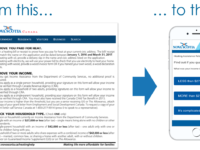
The Heating Assistance Rebate Program (HARP) helps over 42,000 low income Nova Scotians with the high cost of heating their homes in the winter. In 2016 Service Nova Scotia used an innovative approach to modernize HARP from a paper-based application to an online system to improve user experience and government processes. The modernization of this program was uniquely user-driven with significant user-testing leading the transition process and continuous user-testing for ongoing improvement.
The digital economy is booming in Medellín. So is digital tax evasion. To identify potential tax evaders, the local treasury department used to detect unregistered online stores manually. Since the use of social media for economic activities has grown exponentially, the agency has now developed a bot that automatically scrapes Instagram for such stores - and officers can use their time instead to work with store owners to formalize their businesses.
Societal challenges such as demographic change affects rural areas in particular. The Social Foresight Lab is an innovative participatory approach towards rural development and technology transfer to address these challenges. It combines foresight, needs assessment and strategy development. Rural areas benefit, as it takes into account regional characteristics, initiates new cooperations among regional stakeholders, and integrates technological and social innovations into regional development.
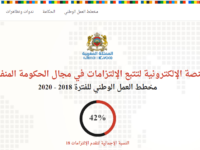
In order to set a common understanding of the progress made on the Government action plan related to Open Government, an online platform publicly shares the details of every government commitment and its corresponding progress. This approach offers:
- A framework for coordination between the different administration entities around Open Government
- A tool for transparency and accountability to be used by civil society and the general public
Case Study
Libellula – a civic monitoring lab and a format to build and sustain a local civic monitoring…
Libellula is a laboratory for civic monitoring of local public spending and a format to build and sustain a local civic monitoring coalition. The first lab is based in Messina, Sicily. Moving from monitoring a specific case, Libellula aims at building a civic multi-stakeholder coalition which, while monitoring, simultaneously cultivates skills and capabilities of those involved to advocate for transparent and collaborative public spending in order to address the misuse of public money.
GovTech Poland has developed world's first challenge based procurement model where the authors of the best idea receive a full implementation contract without the need for an additional cumbersome tender. With the goal of opening procurement to all creative individuals, the model covers the process from identification to implementation. A pilot run, tested in both central and local institutions has increased SME participation in procurement processes by an average of 1600% (in a sample of 250)…
Minas Gerais Government Transparency Portal is an instrument of transparency and control of state governmental actions by its citizens. The data available on the portal allows citizens to inspect and monitor public expenses of the government, contributing to greater transparency and prevention of corruption. Since its creation, the portal has been improved and complies to regulations and standards of public information and has a user friendly interface.
Case Study
Monitoring of the Implementation of the Access to Information Act in the Federal Executive Branch
With the maturing of the Transparency Policy in the Brazilian Federal Executive Branch, there was a need to broaden the assessment of the implementation of the Access to Information Act. The innovation here lies in the methodology adopted, which was previously quantitative and is now also qualitative, allowing an improvement in the answers provided to citizens and the extension of the transparency culture, favoring all stakeholders: public bodies under assessment, citizens and the Government.