

The Latrobe Health Assembly has undertaken a co-design process with service providers, government and people with lived experience to develop an innovative mental health cafe model for Latrobe City. The cafe has and continues to involve people with lived experience at all levels. It aims to: increase opportunities for peer support and social connection; reduce emergency department presentations for non-emergency mental health issues; and improve mental health consumer experiences and outcomes.
Innovation Tag: Citizen Engagement
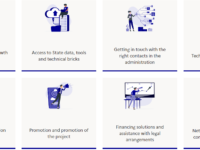
Launched by President Emmanuel Macron at the Open Government Partnership (OGP) Summit in 2021, the Citizen Initiative Accelerator supports citizen-led projects that serve the public good. After being screened by the public administration and a panel of citizens, the selected projects benefit from a 6-month tailor-made support to accelerate their development. This unique program promotes new modes of cooperation between the state and civil society in order to achieve what we call "augmented…

Ethical delivers is a home delivery platform founded in 2020 to address the needs raised by the Coronavirus pandemic as an alternative to extractive capitalist platforms. It provides basic goods and services while respecting workers' rights and environmental sustainability. Designed following cooperative principles through an urban codesign process, it has clear pillars: a fair rider salary, the use of vehicles that minimise environmental impact, and a more direct relationship with small…

Easy Government invites people with disabilities to redesign legal and administrative texts (i.e., laws, subsidy formulares) using an easy-to-read approach based on pictograms, simple words, short paragraphs, and the creation of new products that are simpler and clearer for all audiences (i.e., seniors, immigrants, people with low reading comprehension, children). With the lenses focused on diversity and inclusion we seek to address complex issues faced by these population groups.
The IDT is a multi-stakeholder dialogue methodology whose objective is to generate spaces for collaborative co-creation to design public policy proposals for a locally development challenge.
The IDT Yumbo worked on a challenge prioritized by citizens. The causes were identified and solutions were proposed, creating a policy prototype. Through advocacy platforms, the prototype was presented to the local and regional government to incorporate the proposal as part of the Municipal policymaking.
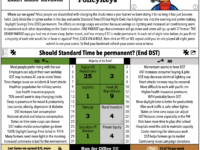
We can agree on a lot more than we are led to believe. PolicyKeys is firstly a robust one-page narrative tool built around a ground truth so an AI can assist in predicting support for any public policy solution. PolicyKeys is secondarily a role-playing game to help player's better understand their own internal conflicts, as well as better understand their fellow citizen's differing beliefs—the result is a leaderboard of ideas that have deep and wide acceptance—approaching consensus.
Case Study
CrowdBots – Using hybrid intelligence to extract value from smaller datasets in biomedical…

When artificial intelligence (AI) is unable to achieve required accuracy levels in biomedical analysis involving very large data sets, the models are often discarded and the research is severely hindered. To solve this problem we created a crowd-powered citizen science game, Stall Catchers, to integrate the cognition of public volunteers with AI methods to achieve rapid, expert-like analysis of Alzheimer's research data aimed at accelerating the discovery of a therapeutic treatment.
Transparency is a key driver of responsible innovation and improved public trust in governments’ use of data and algorithms. The UK’s Algorithmic Transparency Recording Standard helps public sector bodies provide clear information about the algorithmic tools they use and why they’re using them. The Standard is one of the world’s first policies for transparency on the use of algorithmic tools in government decision making and is internationally renowned as best practice.
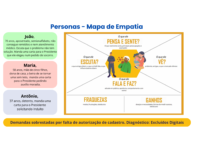
The General Ombudsman Office/CISET/SG/PR (OUVPR) is considered, by part of the population, the highest instance of support for solving problems of access to public services. Among the different social profiles that seek assistance, a large portion of "digitally excluded" stands out; according to IBGE (2018) they represent 25.3% of the Brazilian population. The innovation was due to the unprecedented automation of the process, enabling isonomic treatment of the demands of the "digitally…
"Our Europe, Our Future" is a vast consultation of young people in France and Germany carried out in the framework of the Conference on the Future of Europe. 95,000 young people from both countries expressed their priorities for Europe in two consultations: one carried out on the initiative of the French Ministry of Europe and Foreign Affairs, the other in cooperation with the Franco-German Youth Office and with the support of the German Foreign Ministry.