
Skip to content
An official website of the OECD. Find out more
Created by the Public Governance Directorate

This website was created by the OECD Observatory of Public Sector Innovation (OPSI), part of the OECD Public Governance Directorate (GOV).

How to validate authenticity

Validation that this is an official OECD website can be found on the Innovative Government page of the corporate OECD website.

View as: Map

Filter by:

Countries

Level of government

Sector

Year of launch

Stage of innovation

Recognition

Innovation Tags

Innovations:
0
This website, as well as any data and map included herein, are without prejudice to the status of or sovereignty over any territory, to the delimitation of international frontiers and boundaries and to the name of any territory, city or area.
Law nº 12.527/2011, the Access to Information Act, has come to materialize, in practice, transparency mechanisms of public information predicted in the 1988 Brazilian Federal Constitution, and in other several international treaties. The Law consolidates the understanding that public information is owned by society, not by public bodies that produce or keep it. Reviewing and improving mechanisms of various processes, such as increasing transparency and knowledge management, were implemented.
The Health Office launched a partnership Strategy program to promote the uptake of midwives and health facilities, establishing a synergy between Shamans and Village Midwives. The results of this problem have cut by more than half the maternal mortality rate during child birth.
The ground-breaking 100,000 Genomes Project is a highly ambitious programme that has established the UK as the global leader in genomic medicine. Focussing on rare diseases and common cancers, the Project provided a proof of concept for establishing a fully integrated Genomic Medicine Service in the UK National Health Service, the first health service in the world to offer whole genome sequencing for some conditions.
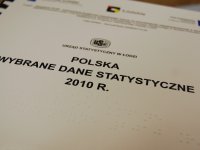
The Statistical Office in Łódź  has created three volumes of publications of extensive statistical data (graphs, tables, etc.) in Braille version on a variety of topics, to create the opportunity of statistical education of blind children and youth. Now the publication is published on the internet to make an opportunity for educational institutions for blind children and youth to download and duplicate it limitless.
The Poverty Stoplight (PS) seeks to activate the potential of families to eliminate multidimensional poverty beyond traditional income measures through a self-evaluation tool. PS is used by communities, businesses and governments to support families in assessing their poverty levels and implementing practical solutions, empowering the poor to be architects and protagonists in the process of eliminating poverty.
We the Citizens is a democratic participatory project to ignite citizen involvement in democracy in Ireland. A pilot project found striking shifts in how participants feel about their ability to influence politics. The project tested whether a more participatory form of democracy could work in Ireland at a time when people felt adrift and disconnected from power. In the project, a representative group of citizens were randomly chosen to attend a Citizens’ Assembly in June 2011.
We aim to solve environmental problems with the power of science and technology, and have focused our efforts on solving the global litter problem. We offer Pirika, an anti-litter smartphone app, and Takanome, an AI-based program that maps and measures litter using visual recognition technology.
Governments through all over the world are struggling against disaffection from the people. Incapacity to participate in policy-making, it’s a common perception among citizens. Citizens has the right not to participate, but administrations has to ensure the right to get involved in policy-making. IREKIA was the first participation portal in Spanish & Basque languages and it has been made in Open Source Software and in its recent version offers and Government Program public tracking tool.
Better Reykjavik is a co-creation project of the Citizens Foundation, Reykjavik City and its citizens that connects them and improves trust and policy. It’s a platform for crowdsourcing solutions to urban challenges and has multiple democratic functions: Agenda setting, Participatory budgeting and Policymaking. Innovations include unique debating system, crowd-sourcing, submission of multimedia content and extensive use of AI to improve the user experience as well as content submitted.