

Aware of the ongoing digital transformation and user needs, HRDKorea (Human Resources Development Service of Korea)partnered with the private sector to leverage industry-leading technology for the creation of the Mobile National Technical Qualification Service. The certificate layout was fully reconfigured to fit the smartphone environment and used blockchain technology to develop a service that now allows users to immediately access their certificates on their mobile phones. The previous model…
Case Study Library
Where innovations are collected and shared to disseminate and replicate good ideas

Innovations:
0
This website, as well as any data and map included herein, are without prejudice to the status of or sovereignty over any territory, to the delimitation of international frontiers and boundaries and to the name of any territory, city or area.
The Intergovernmental Network and Competition for regulatory reform was designed to provide a driving force for regulatory reform and for mutual learning between local governments. It moves away from existing top-down regulatory innovation and rather motivates bottom-up regulatory reform policy, enables mutual learning of best practices, and allows local governments to benefit. Also, the final beneficiaries of the Network are citizens and businesses, as when regulatory innovation increases, so…
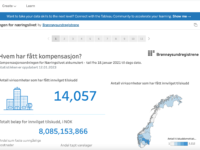
The digital compensation scheme was created to support Norwegian businesses to endure the financial consequences of the Covid-19 pandemic. The scheme designed was quick, efficient, and can be relaunched when needed. Checks are done before the disbursement, which minimizes the need for verification afterwards and also prevents misconduct. Applications are approved by an auditor, and then automatically processed and checked against information from a variety of sources and registers. Information…

Bureaucracy in Jakarta faced 3 main problems: scattered and unstandardized data, siloed systems, and unintegrated services; making public services inefficient and costly, eventually decreasing public service quality. Jakarta Capital City Government addressed the mentioned challenges through JAKI, a Super-App that integrates services by unifying Jakarta’s bureaucracies and data in one digital ecosystem that prioritises citizen participation in overcoming city problems. JAKI is a one-stop…
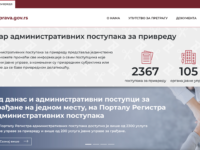
Citizens and businesses often face complex, expensive and non-transparent procedures in order to acquire licenses, permits or certificates, or to fulfill their obligation(s). To solve this issue, the Register of Administrative Procedures (RAP) and its public portal provide information about more than 2300 procedures for citizens and businesses within competences of more than 90 authorities in Serbia – all in one place. It makes public services easy, transparent, predictable and accessible…
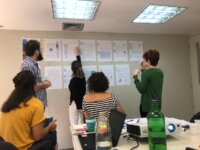
The language in the Brazilian public sector carries a history of being complex, full of acronyms, technical terms, etc. This, at times, means that the population is unable to understand the language used by the government. The Simple Language Programme is the first Brazilian public policy aimed at simplifying the language of government, enabling public servers to communicate more simply and supporting the simplification of documents.
In this project, São Paulo City Hall tested and evaluated the reformulation of collection instruments taking into account behavioral aspects. Currently the relationship between the City Hall and taxpayers is based on repressive inspections, difficult to understand communications and complex flows of payments. With the reformulation of how the IPTU is collected, this increased the municipal tax collection by R $ 60 million/ year. Further experiments have allowed for the estimation that an…
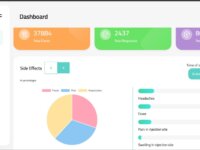
The Government of Ekiti State is working with the Massachusetts Institute of Technology Governance Lab (MIT/GOVLAB) and has developed a community-based reporting system called “E-Surv”. E-Surv enables the participation of community members in public health surveillance by reporting public health events/emergencies, to activate a time-efficient government-led responses. This E-Surv which has been piloted in the State will create an early warning system for disease surveillance and laboratory…

ANII, in collaboration with the private sector and the support of Uruguay's Ministry of Health, is piloting a novel Open Innovation Initiative (MH2030). Ageing populations and rising numbers of people with multiple chronic diseases are placing an increasing burden on health systems. There is a need for improving healthcare by fostering an innovative environment. Through this new co-creative approach, local entrepreneurs work collaboratively with partnering healthcare institutions to tailor and…
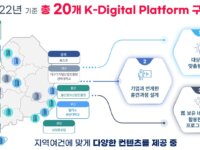
The Korean government recently piloted the K-Digital Platform (KDP) to enhance national digital literacy and foster manpower suitable for digital convergence as digital transformation and low-carbon economy transition accelerated in all areas of the labor market. This is to strengthen the digital capabilities of various consumers, including workers, young job seekers, and the self-employed, and to preemptively and systematically respond to structural changes in future industries.