
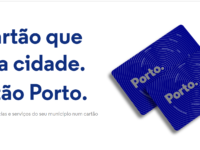
The Porto Citizen Card is designed to identify residents, but above all to offer them privileged use of their city, advantages and benefits in accessing experiences and services of the Municipality. With 46,126 active users, the innovation combines a physical card with a digital platform that integrates a website, a cardholder database, and resources to support current and new services. By concentrating several municipal service access and resources in one card, Porto residents are more aware of…
Case Study Library
Where innovations are collected and shared to disseminate and replicate good ideas

Innovations:
0
This website, as well as any data and map included herein, are without prejudice to the status of or sovereignty over any territory, to the delimitation of international frontiers and boundaries and to the name of any territory, city or area.

This initiative was created to accelerate the decarbonisation process of the energy and transport sectors in Colombia and work on the training and technicalization process for multiple sectors of society involved. A total process of decarbonisation of the energy and transport sectors cannot be possible if working in a single line. Carbon Neutral Pathway (Camino Hacía Carbono Neutral - CHCN) works with a broad range of stakeholders, including public officials, journalists, academics,…
The Information System for Monitoring the State Anti-Corruption Program (country's Integrity Program) was developed to effectively address the challenge of monitoring the Integrity Program. This innovative solution simplifies and streamlines the processes related to the Program's implementation, ultimately leading to more effective governance. Primarily, considering the OECD's Recommendations on Public Integrity, which highlight that traditional approaches relying on strict rules and law…
The implementation of the OKRs (Objectives and Key Results) methodology in the National Agency on Corruption Prevention (NACP) was developed to address performance management, transparency, and team clarity and coordination issues. OKRs have benefited the organization by providing a structured framework to set, track, and measure objectives, thus improving accountability and goal alignment. This marks the first experience of implementing this approach in the Ukrainian public sector, drawing…
The Citizen Innovation Labs (Laboratorios de Innovación Ciudadana - LABIC) are a methodology to generate innovative solutions between citizens and institutions for the common good. They utilise a method to experiment, collaborate and accelerate innovative projects that emerge from citizens and have the potential to generate useful solutions to social, cultural, environmental and economic challenges. These solutions focus on the most pressing issues of the 2030 agenda and they are replicable,…
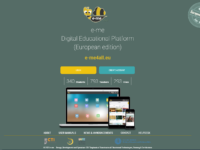
As part of the national plan for the digital transformation of education in Greece, the Greek Ministry of Education's technical body designed and developed “e-me”, a social, collaborative, and extendable cloud-based digital educational platform for pupils and teachers. The goal was for e-me to provide a safe digital workspace and collaboration environment for the entire Greek K-12 community of 150.000 teachers and 1.5M pupils and, thus, to operate as the Greek public official digital…
Case Study
Cultural and technological transformation of the criminal justice service in the province of Buenos…
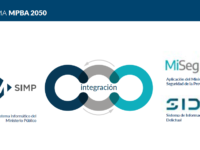
The innovation was developed to solve the difficulties encountered by citizens in accessing the criminal justice service and thus contribute to regenerating the confidence in the system. The cultural and technological transformation of this service increases the quality of the citizen's experience and the judicial agent involved. Buenos Aires' Public Prosecutor's Office applied emerging technologies and innovative management techniques and achieved a more agile, productive, and efficient…
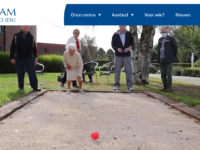
More than 80% of the residents in residential elderly care suffer from unwanted urine loss. This is why care staff check on them regularly, day and night. In order to minimize these disturbing and time-consuming incontinence rounds, the residential care organization Zorg-Saam set out to test new incontinence solutions equipped with sensor technologies that detect when bandages are saturated and alert care staff. With this innovation, supported by the The Programme for Innovation Procurement of…
The Digital Hub: Accelerating Digital Municipalities (Hub digital: Acelerando Municipios Digitales) seeks to accelerate digital transformation in the Chilean municipal sector through the connection with startups. Using corporate venturing as a linkage mechanism benefiting the municipalities and communities themselves, for a solution will improve the quality of services provided to neighbors. Although corporate venturing is widely used in the private sector, we seek to validate its results in the…
The Innovation Fund for Development (Fonds d'Innovation pour le Développement) is a new and ambitious funding mechanism. It offers grants to innovators and researchers to experiment, take strategic risks and demonstrate the impact of solutions aimed at reducing poverty and inequality. It enables teams from all types of organisations to test new ideas and put innovation and research at the service of transforming public development policies.