
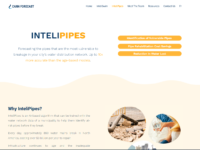
Water networks are confronted with aging infrastructure, increased urban population, and climate change. The City of Greater Sudbury has collaborated with CANN Forecast to implement InteliPipes, an AI-based decision-support system that leverages various data sources to improve the overall reliability of its water network. With it the City can (a) understand better the network’s degradation over time, (b) tailor inspection plans and replacement programmes, and (c) optimise watermains…
Case Study Library
Where innovations are collected and shared to disseminate and replicate good ideas

Innovations:
0
This website, as well as any data and map included herein, are without prejudice to the status of or sovereignty over any territory, to the delimitation of international frontiers and boundaries and to the name of any territory, city or area.
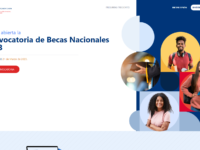
The Unique Scholarship Portal (Portal Único de Becas “Beca tu Futuro”) is a web platform that aims to concentrate all scholarship opportunities in a single portal. In this way, it documents and manages everything from the publication of the call for applications to the awarding of scholarships. The portal benefits all the citizens of the Dominican Republic who wish to apply for a scholarship. Moreover, the portal serves as a management tool for the scholarships' evaluators and the…
Singapore's Government developed OpenAttestation, an open-source framework to support endorsement and verification of documents using the blockchain. With this, an easy and reliable way to issue and validate tamper-proof certificates is readily available to the Government as well as any adopters locally or internationally.

Young Entrepreneurship Mentors is an education project to disseminate the culture of innovative and impact entrepreneurship. It aims to acheive this through agile methodologies that empower students from integrated High Schools in the Federal Network of Science and Technology Education to undertake sustainable solutions for their community through science, technology, and innovation.
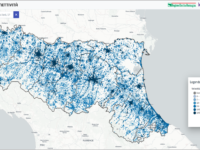
Emilia-Romagna’s Digital Agenda led a significant innovation process for public administration decision-making. The process resulted in a co-design phase with local administrations to structure and publish online the first geo-referenced regional Observatory on ultra-broadband connectivity in Italy. Multi-stakeholder participation made it possible to identify and highlight the various strengths and weaknesses of the tool, enabling its optimisation.
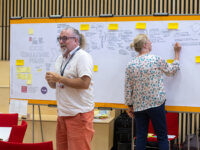
The Local Wealth Building Challenge Fund is designed to provide financial and non-financial support to develop new products and services to tackle challenges. One aspect of this Challenge Fund which is unusual is the focus on developing innovations that will be procured by the challenge holder, providing additional incentives and focus. Public and third sector organizations often have issues that can be solved not by getting new skills or more workers, but by being innovative. The Challenge…

Prioritization of projects and initiatives is often challenging and traditionally requires significant investment in administrative time and effort. The Town of Aurora has created a process that automates the prioritization of projects through an algorithm that scores projects based on Service Improvement, Financial Viability, Reputation Improvement and Ease of Implementation.
The Acolhe Programme offers private network accommodation for women in situations of violence in more than 230 municipalities in Brazil in partnership with municipal networks for confronting violence. In addition to offering reception, the programme acts on the municipality's referral flow by demanding a public response to the problem and offering qualification.

The pandemic has caused a significant increase in amount of people living on the street, who often have no documents and makes access to justice difficult. Pop Rua Jud brought together justice organisms and other public agencies in the same place to prevent citizens from being referred from one public agency to another, without solving their problem. It was innovative in that it brought together almost 50 federal, state and municipal public institutions, as well as civil society organisations,…
CopiCola tackles the problem of knowledge loss in the public sector by investing in the registration of initiatives that can inspire civil servants, facilitate processes and reduce risks. The programme identifies, records and disseminates innovative practices with the potential to be adopted in different public management contexts. Knowledge is passed from civil servant to civil servant, facilitating the connection between actors and enhancing learning from the cases recorded.