
Make.org est une plateforme européenne de mobilisation citoyenne autour d’actions de transformation de la société. Dans ce cadre, Make.org développe une solution digitale de consultation massive, totalement inédite, capable de faire participer autour d’une question simple d’intérêt général, plusieurs milliers de citoyens, dans plusieurs langues, et de restituer les résultats de cette consultation en ligne, de manière quasi instantanée. Cette solution est complétée des…
Case Study Library
Where innovations are collected and shared to disseminate and replicate good ideas

Innovations:
0
This website, as well as any data and map included herein, are without prejudice to the status of or sovereignty over any territory, to the delimitation of international frontiers and boundaries and to the name of any territory, city or area.

Converlens emerged from the Australian government’s 2017/18 Business Research and Innovation Initiative (BRII) "Digitally enabled community engagement in policy and programme design" challenge. The BRII challenge linked into OGP Australia’s first National Action Plan. Deploying artificial intelligence (AI) to provide a smart layer of qualitative natural-language processing techniques (NLP), Converlens assists people in government to excel at managing the submissions and communications…
Case Study
Redesigning the federal homelessness program: engaging people with lived experience of homelessness
As part of the engagement process on the redesign of Canada’s homelessness program, Employment and Social Development Canada engaged directly with people with lived experience of homelessness. Dedicated tools and mechanisms were developed to ensure the meaningful participation of people with lived experience, the removal and mitigation of financial barriers to engagement and recognition of the unique expertise and knowledge of people with lived experience.
Case Study
Engaging People with Lived Experience of Poverty to Build and Implement British Columbia’s First…
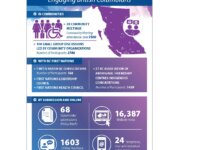
In 2016, British Columbia (B.C.) had the second highest poverty rate in Canada but was the only province without a poverty reduction strategy. To inform its first strategy, a new government completed the most extensive poverty engagement to date in Canada, focusing on people with lived experience of poverty.
To address barriers, B.C. used a range of innovative engagement approaches including direct supports for participants, dedicated Indigenous engagement and funding grants to non-profits.
Canada has an obligation to protect and inform migrant workers of their rights while in Canada and to support employer compliance with the conditions of its Temporary Foreign Worker Program. To this end, it launched the Migrant Worker Support Network pilot initiative. The Network is a collaborative and migrant worker-informed platform for migrant workers, employers, governments, and civil society to develop and implement solutions to better protection and support of migrant workers in Canada.
There is a significant gap in Labour Market Information for people living on reserves in Canada. This Pilot project will improve the detail and timeliness of labour force information for on-reserve First Nations (FN) communities towards reducing the skills and employment gaps between First Nations and non-indigenous Canadians, through co-development.
The components to the Innovation are:
1.Annual survey of the entire on-reserve population 15 years or older
2.Skills inventory to support skills…
Employment and Social Development Canada (ESDC) led the design and implementation of a national poverty reduction strategy public engagement process. We offered Canadians multiple ways to share their views, from public town hall events to online discussions, to a youth contest, to an in-depth research project. The engagement process successfully reached thousands of Canadians in a short time frame on a low budget. The plan is now used as a Government of Canada model for effective civic…
As a criminal court judge I felt the need to implement concrete actions to establish a new way of adjudicating in my country (Argentina) by relying on Open Government’s principles. Among some of the implemented policies, we publish all of the court's decisions, the court hearings' agenda, statistics and reports on the administration of the court and the biographical information of the court's employees. We do so by using our Twitter (@jpcyf13) and YouTube accounts.
In June 2017 the Government created a Social Innovation and Social Finance Strategy Co-Creation Steering Group (SG) to provide recommendations for a Strategy. Based on a year-long process the SG developed 12 recommendations.
In response, the Government announced the Strategy’s foundational elements in November 2018 including a $50 million Investment and Readiness program to build the capacity of organization to access social finance and a $755 million repayable Social Finance Fund.
The Client Centric Policy Playbook strengthens the ability to engage clients in the design of program and service policies.
Through extensive engagement with policy experts and employees on-the-ground, the Playbook has brought together innovative best practices, tools and resources for engaging clients.
This solution enhances client experience by giving clients an opportunity to be part of the policy generation process and by ensuring that programs and services are reflective of their needs.