
Public sector agencies are generating more video/image data but much of the data is not leveraged due to the high overheads and custom requirements in processing video. The VAS platform provides easy access to a spectrum of in-house and industry developed video analytics capability as well as model prototyping capabilities for agency use cases. The key innovation focus on bringing together a scalable platform, lowering the barrier of entry for usage of video analytics, empowering the pub
Innovation Tag: Behavioural Insights
Case Study
The Happiness Curriculum: Inculcating mindfulness and social and emotional learning amongst students…
The Happiness Curriculum (HC) is the first systemic step towards holistic development of all learners under the formal education set up. Launched in 2018 by his holiness Dalai Lama, this is the first time in the world, that there is a curriculum that focusses on inculcating mindfulness and social emotional learning as a practice every day at such a big scale. It is being implemented with more than 800,000 students from kindergarten through Grade 8 across more than 1000 Delhi government schools.
Case Study
Farishte Dilli Ke – Empowering Citizens Through Accessible and Reliable Emergency Healthcare…
Farishte Dilli Ke (Hindi for Saviours of Delhi) uses innovative fiscal and non-fiscal incentives to encourage citizens to become Good Samaritans by helping victims of road traffic accidents, thermal burns and acid attacks without the fear of legal hassle or police enquiry. Under this scheme, the victims receive cashless treatment at any registered public or private nursing home or hospital across Delhi benefitting more than 18,919 people in the last 5 years.

KSPO has created the SOLF, Seoul Olympic Legacy Forum as a platform where Olympic legacy entities from all around the world gather for the first time to share and collaborate on sustainable development plans for the Olympic Legacy. Through the SOLF, Olympic legacy entities communicated and cooperated with each other to solve the long-term social problems after the Olympic games and to deliver intangible legacy of Olympic spirit and world peace to future generations.
A proof of concept has been created to incorporate design techniques in many elements of a PoD's life cycle, planning for future demands and overcoming existing hurdles. The proposed strategy prioritizes the needs of persons with disabilities and helps them acquire the resources and services they need. It also helps families gain confidence in caring for a disabled kid. This helps POD engage, lead, create, and sustain life.
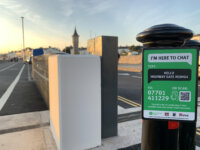
The Environment Agency has a responsibility to protect communities from flood and coastal risks. In the past, the agency has struggled to scale their public engagement and reach their diverse audiences, while also retaining a local relevance. Hello Lamp Post was brought on to provide an interactive, live 24/7 conversational channel to educate and inform the public on flood safety, in high-risk locations around the South West of England and Newcastle.
Case Study
Renovate or Rebuild: Using television to support the transition to sustainable housing in Australia
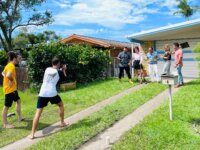
Renovate or Rebuild was a collaborative project that set out to increase the uptake of sustainable homes in the Australian residential sector. The show took an innovative approach to embed behavioural and building science into an engaging, yet informative and impactful TV series, that promoted and normalised sustainable homes. Research estimates this project could save Australians $600 million on their energy bills and would cost less than $1.60 for every tonne of greenhouse gas abated.
During the Russian invasion of Ukraine, relief organizations and government agencies lacked data about events on the ground and struggled to mount an effective response. New methods of event detection were urgently needed. A research team comprised of country experts and computational social scientists created a Twitter-based event detection system that provides geo-located event data on humanitarian needs, displaced persons, human rights abuses and civilian resistance in near real-time.
Tackling the effects of rising urban heat goes beyond objective physical measurements. For sure, technical services are in need of blended indicators about the effects of local policies: under which conditions tree planting, fountains, urban design contribute to reduce island heats. The project has created such tools, but is also willing to take seriously into account the subjectivity, the perceived heat, the sensations of our citizens, for they contribute hugely to our collective resilience.
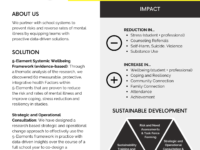
Mind the Class, a mental health prevention organization, is partnering with school systems to reduce the risks and reverse the rates of mental and behavioral health disorders by creating a community ecosystem. This full year project collaboratively designs a preventive implementation plan using proven wellbeing research and data-driven solutions in collaboration with our University of Warsaw partners and through local public and private partners support sustainable development.