
The Future Tech Challenge (FTC) is a pilot initiative led by DPER to connect and collaborate across the wider ecosystem, and engage in transformative innovation by experimenting with, and applying new technology to address pressing public sector problems and opportunities that deliver improved services to the public. Drive innovation using emerging technology, enhance collaboration, meet National strategic priorities, generate knowledge & learnings and develop prototyped solutions.
Innovation Tag: Cross-Sector Partnerships

In 2017, Korea opened the online platform allowing the public to make policy suggestions, ‘Gwanghwamun 1st street’ as an effort to expand Direct Democracy. Following this lead, Gwanak-gu developed its own online platform, ‘Online Gwanak-gu Office’. ‘Online Gwanak-gu Office’, which is exclusively for Gwanak-gu citizens, utilized user participation during development, and its innovation comes from the integration of various existing public participation routes.
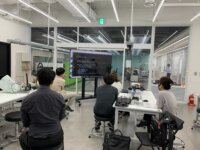
Small and medium-sized companies often cannot afford investments in Artificial Intelligence technologies. Through AI Friends project, AI became more accessible, affordable, and familiar for entrepreneurs and citizens. AI festival, training, co-working spaces, and pilot solution consulting is operated through the cooperation of universities, research institutes, industries, government, and citizens over the last four years.
Case Study
A co-created Philosophy of Care for the development and establishment of the new Urgent Mental…
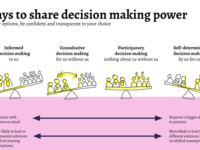
When planning began for a first-of-its-kind Urgent Mental Health Care Centre as an alternative to a failing emergency department experience, a new standard that centred people with lived experiences in system reform decisions was needed. People with lived experiences came together to co-create a philosophy of care for the centre that would uphold service integrity, hold implementation providers accountable, and communicate the care experience and service culture that people expect.
Since October 2020, as part of supporting economic recovery from the pandemic, South Africa's Presidential Employment Stimulus has created over a million jobs and livelihood opportunities, mainly for youth and women, across all skills levels and with high levels of spatial equity. It has 're-imagined' public employment (or public works) as an instrument for social innovation at scale, in relation to the forms of work and public value created, unlocking initiative in and beyond the state.
Case Study
Collections of Ghent – Connecting citizens through digitised cultural heritage reuse and…
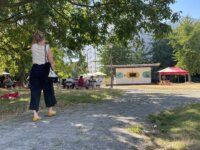
Collections of Ghent is an EU-funded innovation project designed to tackle the urban challenge: How to digitise cultural heritage beyond the cultural institutions, on a city level or higher. And how to use it to improve social cohesion and inclusion within a neighbourhood. It is both a digital transformation project, and a social innovation project where we research how digital cultural heritage can be used in co-creative and participative way.
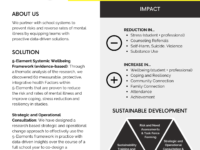
Mind the Class, a mental health prevention organization, is partnering with school systems to reduce the risks and reverse the rates of mental and behavioral health disorders by creating a community ecosystem. This full year project collaboratively designs a preventive implementation plan using proven wellbeing research and data-driven solutions in collaboration with our University of Warsaw partners and through local public and private partners support sustainable development.
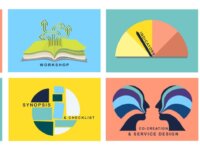
In the VUCA (volatility, uncertainty, complexity and ambiguity) world, the tasks of the government are interconnected and require cross-border collaboration and dialogue within ecosystems. However, one of the key challenges is the lack of knowledge and easy-to-deploy tools. As partners of Work2.0Lab (Työ2.0Lab), we co-created and implemented Ecosystem School 1.0. Its purpose was to develop ecosystem thinking, capabilities and tools to support phenomenon-oriented work within ecosystems.

Customer-oriented public services direct the authorities to look at citizens from their own responsibilities without taking into account a citizen’s overall life situation. A human-centric and life event -based operating model supported with the life-event service ecosystem technology enables the authorities to produce value directly in people's life events through the cooperation of other service providers in a timely and proactive manner.
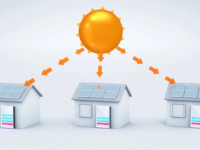
SA VPP is the largest network of home solar and battery systems lowering energy costs for thousands of public housing tenants while providing critical energy network services.
SA VPP has developed innovative approaches to:
Significantly reduced energy bills for vulnerable South Australians
Providing more access to renewable energy for more people
Proving new commercial models for financing renewable energy assets
Driving regulatory reform that accelerates Australia’s energy market…