
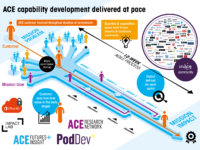
Government struggles to exploit advances in science and technology that could improve public services. The UK Home Office developed a new, cost-effective model to enable start-ups, Small and Medium-sized Enterprises (SMEs), not-for-profits and academia to solve frontline challenges across UK government using diverse, cutting-edge capabilities and expertise. Uniquely, for UK public sector, it uses flexible, novel ways of working and commercial mechanisms to deliver mission impact at pace.
Innovation Tag: Evaluation and Oversight
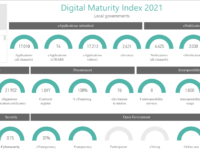
Digital transformation is a long-term journey that involves complex changes. One of the challenges is how we evaluate the progress. We are inspired by the quote, "If you cannot measure it, you cannot improve it". Most of Catalonia's municipalities cannot do a digital assessment. The Digital Maturity Index provides an evaluation turnkey solution for local governments. It is based on open data, and it has a clear focus on public value impact.
The Future Tech Challenge (FTC) is a pilot initiative led by DPER to connect and collaborate across the wider ecosystem, and engage in transformative innovation by experimenting with, and applying new technology to address pressing public sector problems and opportunities that deliver improved services to the public. Drive innovation using emerging technology, enhance collaboration, meet National strategic priorities, generate knowledge & learnings and develop prototyped solutions.
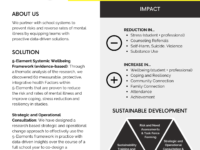
Mind the Class, a mental health prevention organization, is partnering with school systems to reduce the risks and reverse the rates of mental and behavioral health disorders by creating a community ecosystem. This full year project collaboratively designs a preventive implementation plan using proven wellbeing research and data-driven solutions in collaboration with our University of Warsaw partners and through local public and private partners support sustainable development.
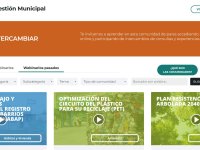
The Municipal Management Portal is an online platform for local government policy practitioners to learn and share expertise and build collaborative networks across Argentina and internationally. The Portal is innovative not only through new applications of technology but also because it reflects a new conceptual understanding of Argentinian local government as open, professionalised and dynamic.
Case Study
Skrinja (Chest): Using Emerging Technologies for Better Digital Public Services and Data Driven…
The innovation has been developed to support data-driven decisions and to improve transparency and efficiency for better governance. Manual analytic work can be better organised and automated by offering self-serving dashboards and infographics. Data Warehouse and Business Intelligence are used as a central governmental platform to be offered as a service to the public sector. The project is introducing new concepts and tools of analytics and business intelligence in the public administration…
The Innovation Barometer is the world’s first official statistics on Public Sector Innovation (PSI), now implemented in 5 countries, providing innovators and decision makers with systematic knowledge of what thousands of innovators 'actually do’. The barometer advances PSI as a tool for solving societal problems and is used in practice for: inspiring innovation work, policymaking, strategising, executive leadership development, teaching, research and consultancy services.
Public sector innovation can drive better outcomes for citizens. However, successful innovative initiatives are the result of individual efforts, rather than an empowering environment. How can citizens be provided with access to data to hold their government to account? The Innovation Barometer will do this, giving officials and the public data, spotlighting shortcoming, and providing actionable steps to track changes overtime, improving government's ability to deliver public value.
The Ministry of Mines of Peru, alongside the IFC, BHP, various mining companies, and CISCO developed the Mining InfoCenter, a one-stop-shop social and digital innovation to provide mining-related information and capacity building to local leaders. The system will enable them to access information from the private and the public sector, build their capacities, and provide feedback to mining companies and the government, generating an informed dialogue that drives local development and contributes…
The Rosselkhoznadzor has developed an artificial intelligence model that can detect violations in all production chains of animal products in order to reduce the proportion of counterfeit and falsified products of animal origin on the market as much as possible. The innovation is beneficial to a healthy society, conscientious agricultural producers and the state.
Artificial intelligence methods for detecting violations have not been previously applied by the Rosselkhoznadzor.