
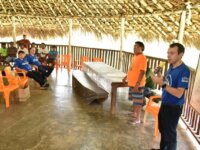
The "Programa Justiça Cidadã" in Brazil's Roraima state, led by the State Court of Justice, extends legal services to remote regions, including indigenous and riverside communities, addressing the needs of Venezuelan migrants. Through permanent service points and digital integration, it promotes inclusivity and accessibility, ensuring all residents can access legal support.
Innovation Tag: Service Design
Case Study
Shared Services Center “ColaboraGov”: An Innovative Model for Delivering Administrative Services…
In order to enable strategic ministerial expansion without increasing costs, ColaboraGov centralizes the sharing of administrative support services among 13 ministries. It ensures savings in resources, gains in scale and quality, and standardized service provision. It comprises more than 41,000 civil servants, 374 services and has an impact on 10 areas - such as human resources, finance and logistics - thus making it easier for the government to direct its efforts towards final public policies.
Public services play a crucial role in shaping citizens’ experience of society. This handbook is aimed at professionals working in public services and focuses on concrete pratices to strengthen trust and democracy in everyday service encounters. It helps to make public services more effective by initiating and maintain trust, enhancing participation and agency, and through them delivering better learning, better safety, and better welfare.
Case Study
High Impact Service Provider Case Study: Innovating the Individual Assistance Program For Survivors…
The Federal Emergency Management Agency (FEMA), a component of the United States’ Federal Government, has fully reimagined its DisasterAssistance.gov website to make applying for disaster assistance faster than ever. This change will reduce time burdens for survivors post-disaster, when they are in greatest need and the most overwhelmed. This effort has been built on decades of feedback from disaster survivors and is expected to reduce the registration time by more than 15%.

In the U.S. government, community members have experimented with designing the government services they will use. Their lived experience improves service outcomes, builds better relations with the government, and creates greater ownership over the service. This is new; normal participatory design of government services just includes community members for certain activities at certain points, never throughout, and never allowing the community to lead and frame the project or choose methodologies.

Zaragoza City Council has launched a new electronic citizen participation platform with the aim of involving its citizens in public policy decisions and in the design of its services. It provides an interactive space for residents to actively contribute, strengthening the collaboration between the administration and the community, thus fostering a more inclusive and transparent management.

This project aimed to translate new legislation on occupational injuries into a citizen-oriented service journey, helping those injured at work to re-enter the workforce through education. Through co-creation, we designed the future customer journey, designing a unified service that involved various stakeholders.
The Conectando Saberes ('Connecting Knowledge') Academy of the Specialised Protection Service for Children and Adolescents presents a novel way of training people who intervene directly in the protection of the rights of children and adolescents using a digital platform. The design was co-creative, taking into account the vision and experience of those who are in direct contact with children and their families.
The National Injury Insurance Agency Queensland in partnership with Queensland University of Technology is revolutionising support for those severely injured in accidents by offering a digital platform for easier access to services and self-management. This initiative provides a seamless, empowering user experience, enhancing independence and trust in public support systems. It's innovative because it transforms traditional, paper-based processes into an accessible, efficient digital solution.
A partnership of the University of Cape Town's Design Thinking School and the Western Cape Public Library Service sought to reconfigure the service delivery model of public libraries to draw in South Africa's young adult demographic. A pilot in Wellington (Cape Winelands) yielded three user-tested solutions to improve the library services model and effectively respond to the often neglected needs of young people not in employment, education, or training (NEETs).