
The Digital Court File is an everyday tool for judges, court staff, lawyers and parties to a proceeding that will replace the paper-based court file entirely. It links hundreds of pages of court files into a single view, and all participants in the proceedings can access the documents electronically. The Digital File can also be used as a tool to make cross-references, add notes and comments, search by keyword, filter documents and export them to your computer.
Case Study Library
Where innovations are collected and shared to disseminate and replicate good ideas

Innovations:
0
This website, as well as any data and map included herein, are without prejudice to the status of or sovereignty over any territory, to the delimitation of international frontiers and boundaries and to the name of any territory, city or area.

The Government Mentor Program (GMP) is an initiative started by the Government of Telangana, India, envisioned to build familiarity with the Government by bringing officials from relevant departments to mentor startups. The organisers believe that startups work on innovative solutions that have the potential to reform existing processes and services that bodies provide. The goal of GMP is to assist entrepreneurs eyeing the Government as a client to establish connections and seek mentorship…
The program transitions chronically homeless patients from the Emergency Room into permanent supportive housing. Their partner, the Center For Housing & Health, has developed a network of 27 supportive housing providers representing ~4,000 scattered site one bedroom apartments dispersed throughout Chicago. The project has housed 59 patients to date, and has found very high mortality (34%) and high rates of uncontrolled chronic disease. Housing is health - it is as a dangerous health condition.

Homelessness is spiralling in the UK, and people want to help but are unsure how and no longer carry cash. In partnership with Mayor of London, TAP London has installed 100 contactless giving points across the city, enabling Londoners to give a £3 tap to support local homelessness services.
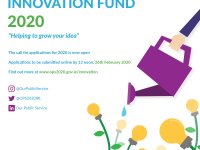
The Public Service Innovation Fund provides public service bodies in Ireland with a means to fund innovative projects that may not otherwise get financed by their organisations. It was developed to help promote a greater culture of innovation and experimentation in the Irish Public Service, and to showcase the benefits of innovation to other public servants considering embarking on their own innovative project. This is Ireland's first public service-only innovation funding mechanism.
The City of Austin has launched a shared approach to user-centered design, iterative technology development, and collaborative policymaking through its Office of Design & Delivery, which has grown to include over 25 experts in service design, interaction design, content strategy, web development, and agile product management. Through cross-disciplinary teams spanning design, technology, and policy, their teams have improved outcomes in public safety, public health, and digital transformation.
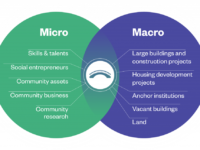
USE-IT!, Unlocking Social & Economic Innovation Together!, is a whole neighbourhood approach to addressing urban poverty.
It innovates by building bridges between the places, the people, the public sector, the private sector and civic society partners in a community so they can co-produce solutions to poverty that unlock opportunities and that fits their needs.
By doing this, USE-IT! works by respecting what is already there in a community rather than by assuming what needs to change.

While tens of thousands of refugees are permanently resettled to host countries every year, governments lack the capacity to know which communities to place which refugees.
Annie™ MOORE, used by the resettlement agency HIAS, deploys advanced analytics to recommend communities that are most likely to maximize refugees’ odds of being employed.
Annie™ boosts employment chances by at least 30% over manual placement and ensures that the needs of refugees and community capacities are both…

The European Qualifications Passport for Refugees is a unique instrument providing refugees with an assessment of qualifications that cannot be fully documented. Based on the Lisbon Recognition Convention (Council of Europe/UNESCO), the methodology tested by the Council of Europe, the UNHCR, nine countries, National Recognition Centres and universities enables refugees to have their qualifications accepted across borders to continue their studies or find a job related to their education.
The Ministry of Possibilities is a virtual ministry created to incubate and solve the systemic impossibilities of government.
It works by creating time-bound departments experimenting together to ask impossible questions and disrupt the conventional systems with leapfrog solutions that are yet to be explored
Its focus areas & mandate are:
To IDENTIFY impossibilities
To INCUBATE virtual, timebound departments/teams to solve and explore the impossibilities
To EDUCATE and train on the mindset of…