
Skip to content
An official website of the OECD. Find out more
Created by the Public Governance Directorate

This website was created by the OECD Observatory of Public Sector Innovation (OPSI), part of the OECD Public Governance Directorate (GOV).

How to validate authenticity

Validation that this is an official OECD website can be found on the Innovative Government page of the corporate OECD website.

View as: Map

Filter by:

Countries

Level of government

Sector

Year of launch

Stage of innovation

Recognition

Innovation Tags

Innovations:
0
This website, as well as any data and map included herein, are without prejudice to the status of or sovereignty over any territory, to the delimitation of international frontiers and boundaries and to the name of any territory, city or area.
Future Skills is part of the Government’s plan to build a resilient and confident workforce that reflects Canada rapidly evolving nature of work. It embraces user-centred design principles to inform the adoption of proven practices and evidence on skills development approaches, to ensure that Canada’s policies and programs are prepared to meet Canadians’ changing needs. It was designed in collaboration with provincial and territorial governments, and informed by a large range of…
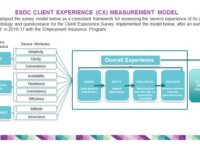
The Client Experience Measurement Survey Model was developed by Employment and Social Development Canada to gather and analyse client feedback to improve service delivery to its clients. Canadians have been able to express their views on government programs and services, which have informed the way programs and services are designed and delivered.  The survey allows the tracking of service satisfaction, ease of access, effectiveness of service delivery, and the experience of particular programs…
The Indigenous Early Learning and Child Care (ELCC) Framework is innovative because it represents a promising practice in the development of a comprehensive policy, program and implementation strategy that was co-developed with the Government of Canada and Indigneous peoples. The document recognizes the value of Indigenous-led, culturally-grounded programs and that supports their health and wellbeing, spiritual, social and educational development, and language and culture.
With a citizen-centric approach and a strong focus on co-creation, SIMPLEX is a simplification and modernization program focused on improving public service efficiency and designed to facilitate the citizens and businesses everyday life, and their interaction with the public administration. Launched in 2006, it had several editions since then and resulted in the implementation of hundreds of initiatives that cut red tape, reduced context costs and used ICT to deliver better public services.
Innovation helps citizens extract value from open data on the use of public funds and fosters accountability of public authorities for goods, services and works purchased. With the help of the electronic platform, the citizens and business can complain about non-competitive behaviour, poor quality or check the efficiency of procurement by their city council, school, hospital. Introduction of AI-powered risk monitoring allowed anyone to find and act upon violations in a fast and simple manner.
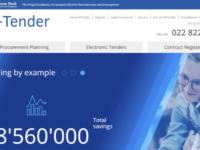
MTender is a revolutionary tool which will transform the way public funds are spent in Moldova, a country with a long history of corruption. The world’s first fully digital public procurement system, MTender uses open data to manage every element of the public contracting system. This enables officials to do their jobs better, citizens to hold the government to account, taxpayers to get a better deal, and businesses to compete on a level playing field.
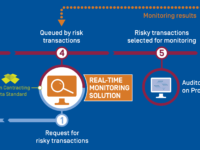
Ukraine is transforming its public procurement system to bring public procurement into the open, so citizens get a better deal and government runs smoothly. EBRD has supported the Ukrainian government to develop a new legal framework, and to develop cutting edge tools which can process vast amounts of procurement data in real time. State auditors can now quickly & pre-emptively spot risks or inefficiencies in the system and address them. It is the first innovation of this kind in the world.
MEData is the strategy for providing, appropriating and using the public data of Medellin. It will become the official information source of the city, where citizens will have constant and reliable data that can be used to generate knowledge, promote technological innovation and boost economy. it is the first government platform that integrates strategic information sources into a big data technology and automatically synchronizes them with an open data portal.
Identifying representative indicators requires distinguishing the driving forces and directions of relationships in innovation, economic or health data. The innovation is an algorithm, a sequence of coded instructions, automated to derive visual tools directly from big data. The algorithm is adaptable to various fields of study for rapid, data visualisation and enables transparent, evidence-based indicator prioritisation.
The prolonged economic crisis in Europe has led to a growing feeling of alienation among citizens from the main decision-making centres. The co-creation research methodology for co-operative governance is an innovative approach to stakeholder engagement in which policymakers and researchers work as a team in dialogue spaces configured to address different territorial challenges. A participative, open and collaborative governance for the economic development of Gipuzkoa is therefore being built.