
The Reciclocidades was implemented to strengthen community relationships and contribute to the generation of work and income, the reduction of social inequality, female empowerment and the longevity of natural resources. It offers solutions to problems and needs that affect society, mainly aimed at women in socially vulnerable situations, who are trained to transform solid waste into new products that can be sold. Its main objective is to generate work and income for socially vulnerable women…
Country: Brazil

Fish production within water supply reservoirs is an important socioeconomic activity, but it causes pollution due to the significant release of nutrients into the water. This project developed a new tool that has assisted government in making decisions regarding the permitted input loads of nutrients from fish farms. Before the project, there was no methodology to predict the permitted pollutant loads for a sustainable management of reservoirs located in tropical semiarid regions. The hope is…
The City of Recife, like any city, faces the challenge of solving complex problems, however, there was difficulty in identifying them and finding effective solutions. The opportunity then arose to encourage open innovation in the city and involve the community in the development of solutions. Innovation lies in how to identify these problems, transform them into challenges and how to buy something new from a public body to solve these challenges. EITA Recife brings together the City Hall…
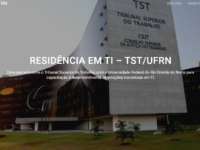
The open innovation model was developed in partnership with Federal University of Rio Grande do Norte (Universidade Federal do Rio Grande do Norte) and Superior Court of Labour (Tribunal Superior do Trabalho) to implement a Residency programme in Information Technology. The objectives are: qualification of human resources in the IT area, realisation of applied research and development of innovative IT solutions for the Superior Court of Labour (TST). It proposes a model of innovation in the…
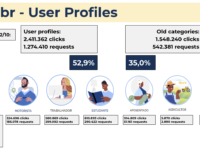
Brazil’s gov.br website offers almost 5.000 public services and has more than 200 million monthly page views on average. With so many service options, it’s paramount to make them easily available. Under that mindset, the Ministry of Economy developed two important improvements to its usability: the first is the use of AI to recommend services based on the citizen's browsing history. The second was creating User profiles as a way of finding services based on the citizens’ journeys.
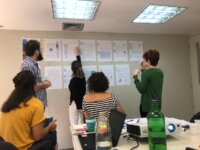
The language in the Brazilian public sector carries a history of being complex, full of acronyms, technical terms, etc. This, at times, means that the population is unable to understand the language used by the government. The Simple Language Programme is the first Brazilian public policy aimed at simplifying the language of government, enabling public servers to communicate more simply and supporting the simplification of documents.
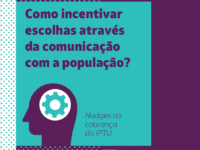
In this project, São Paulo City Hall tested and evaluated the reformulation of collection instruments taking into account behavioral aspects. Currently the relationship between the City Hall and taxpayers is based on repressive inspections, difficult to understand communications and complex flows of payments. With the reformulation of how the IPTU is collected, this increased the municipal tax collection by R $ 60 million/ year. Further experiments have allowed for the estimation that an…
The Women in Rural Brazil website offers gender-strategic information to subsidize innovation projects and development initiatives whose goal is to improve the quality of life of women living in rural areas of Brazil. Approximately one million women manage agricultural enterprises and 4,5 million work in the agricultural and livestock sector. Although these women constitute a large demographic group, there is still very little research, development and innovation projects which target their…
The Disciplinary Maturity Model (CRG-MM) is a pioneer model in Brazil and is an operational and strategic tool aimed to evaluating and improving the management of disciplinary activity, through the definition of quality standards based on management and public governance procedures. This innovation seeks to provide greater stability and security to executors and managers of disciplinary activity, considering its role as a public integrity instance in the fight against corruption.